Affordable Homemade Finger Food Recipes for Any Party
Affordable homemade finger food recipes are party catering solutions built around pantry staples, seasonal produce, and high-yield batch cooking techniques - not expensive proteins or ready-made platters. The core principle is cost-per-piece thinking: a batch of 24 homemade sausage rolls made from puff pastry and seasoned beef mince costs roughly AUD $8-12 at current Woolworths or Coles prices, translating to approximately $0.40-0.50 per piece. The equivalent product from a Sydney catering company runs $2.50-4.00 per piece. That cost difference - across a spread of 5-6 homemade varieties for 30 guests - represents $200-350 in savings without any visible compromise to the finished platter. The recipes covered in this guide are built on that same economic logic: high-impact flavour from low-cost ingredients, batch-sized for 20-50 guests, and designed to be made ahead so preparation time does not consume the host's entire event day.
Why Do Affordable Homemade Finger Food Recipes Work Better Than Store-Bought?
The quality gap between homemade and store-bought finger food is not about technique - it is about freshness and fat quality. Commercially produced party food is formulated to survive refrigerated transport, extended shelf life, and reheating cycles. These requirements drive manufacturers toward higher sodium content, preservatives, and cheaper fats. A homemade sausage roll uses full-butter puff pastry and fresh mince; its supermarket equivalent uses a margarine-based pastry and textured protein filler. The difference is immediately perceptible to guests.
The second advantage is portion control over ingredient quality. A homemade recipe allows the cook to increase the filling-to-pastry ratio, use fresh herbs rather than dried, and season to taste rather than to a standardised formula. A homemade sweet corn and zucchini fritter contains the actual vegetable in quantities that a commercial version cannot justify economically. This gap in ingredient density directly affects texture, flavour intensity, and guest satisfaction.
The third advantage is dietary customisation. Commercial finger food products carry fixed allergen profiles. Homemade recipes allow complete control over gluten, dairy, egg, and nut content - a critical capability when the guest list includes known dietary requirements. A batch of chickpea fritters made with chickpea flour (besan) rather than wheat flour is simultaneously gluten-free, vegan, and high-protein - a dietary triple-header that no supermarket product category accommodates in a single item.
What Are the Best Affordable Homemade Finger Food Recipes for a Party?
3-Ingredient Puff Pastry Sausage Rolls
The cheapest, highest-yield homemade finger food recipe available to Australian home cooks is the three-ingredient sausage roll: store-brand puff pastry sheets (2 sheets, approximately AUD $4), beef and pork mince (500g, approximately $5-7), and a beaten egg for the glaze. One batch yields 24-32 cocktail-sized pieces depending on cut length.
The technique that separates a good homemade sausage roll from a mediocre one is seasoning the mince before rolling. A combination of Worcestershire sauce (1 tbsp), Dijon mustard (1 tsp), finely grated onion (half a medium onion), white pepper, and fresh thyme transforms plain mince into a filling with enough flavour depth to stand independently. Roll the seasoned mince into a cylinder along the pastry edge, roll tight, brush the seam with egg, and cut into 4-5cm lengths before baking at 200°C fan-forced for 20-22 minutes until deep golden. These can be frozen raw and baked directly from frozen (add 8 minutes to bake time), making them the most preparation-efficient item in the homemade party catering toolkit.
Sweet Corn and Zucchini Fritters
Sweet corn and zucchini fritters are the most cost-effective vegetarian hot finger food recipe in Australian home cooking. The base ingredients - 2 cobs of corn (or one 400g tin of corn kernels at approximately $1.20), 2 medium zucchini (approximately $1.50-2.00), 2 eggs, half a cup of self-raising flour, and a handful of grated parmesan or cheddar - cost under $6 total and yield 18-22 fritters.
The critical technique is moisture removal. Grated zucchini must be salted, rested for 10 minutes, and squeezed thoroughly in a clean tea towel before combining with other ingredients. Wet zucchini produces fritters that steam-cook rather than fry, resulting in a pale, soft, structurally weak piece that falls apart on the platter. Dry zucchini produces a fritter that crisps on the surface, holds its shape through a 2-hour service period, and reheat reliably in an oven at 180°C for 8 minutes. Serve with a sour cream and chive dip or a Greek yogurt-tahini combination - both are achievable under $2 additional cost.
Bruschetta on Toasted Baguette
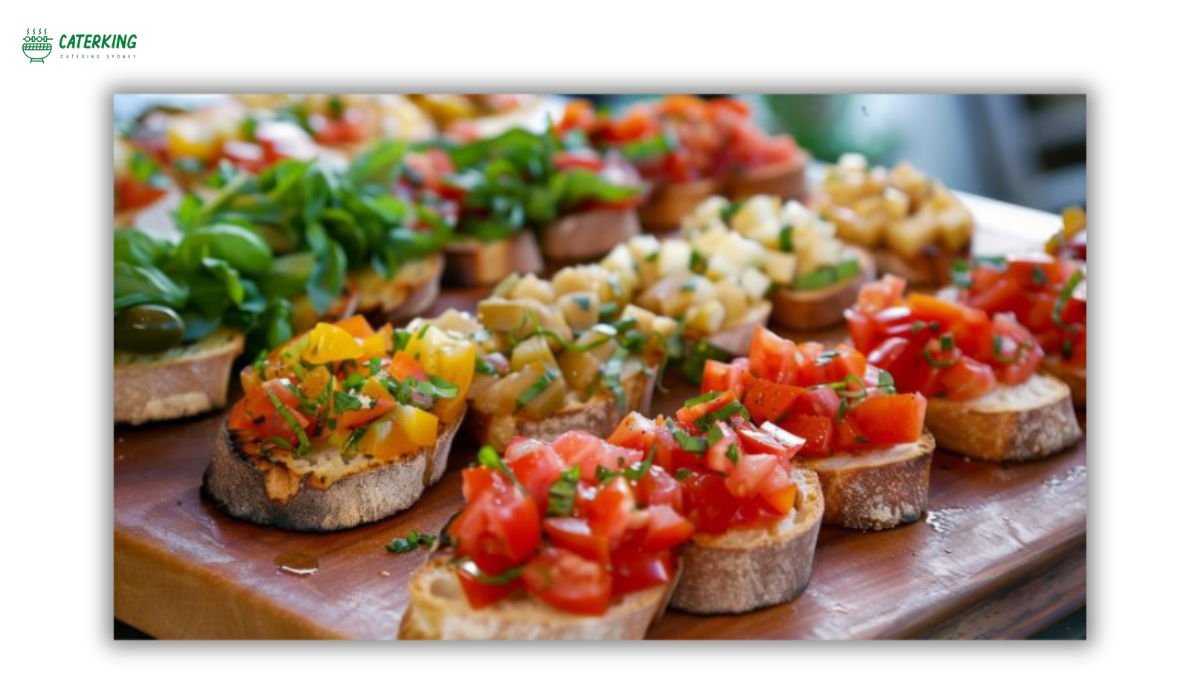
Bruschetta is the highest visual-to-cost ratio cold finger food available to home party cooks. A sourdough baguette from Coles or Woolworths (approximately $3.50-4.50) sliced into 20-25 rounds, toasted under the grill with a brush of olive oil, and topped with a hand-mixed bruschetta base (4 ripe Roma tomatoes, half a red onion finely diced, fresh basil, a tablespoon of extra virgin olive oil, salt, and a squeeze of lemon) produces a platter of 20-25 pieces for under $7 total.
The ingredient that elevates homemade bruschetta above its supermarket-jar equivalent is tomato ripeness. Roma tomatoes that have been left at room temperature for 2-3 days after purchase are measurably sweeter and more flavourful than refrigerated tomatoes. Cutting them into 5mm dice rather than rough chunks creates a topping that sits neatly on the bread round without sliding off when a guest picks it up. Assemble the toasted rounds and the bruschetta base separately, combining only at service time to prevent the bread softening from tomato liquid.
Spinach and Feta Puff Pastry Triangles
Spinach and feta triangles (or spanakopita-style pastry bites) are the most crowd-versatile affordable homemade finger food on this list - they satisfy vegetarians, guests who eat meat, and anyone who gravitates toward pastry items. The filling uses frozen spinach (500g bag, approximately $2.50), crumbled feta (200g block, approximately $3.50-4.50), 2 eggs, nutmeg, and black pepper. Two sheets of puff pastry (part of the same $4 pack used for sausage rolls) yields 24-30 pieces depending on cut size.
Drain frozen spinach thoroughly - squeeze it in a colander with a spoon, then again in a clean cloth - before mixing with the feta and eggs. The filling must be dry or the pastry will not crisp underneath. Cut the pastry sheets into 8cm squares, place a teaspoon of filling at the centre, fold into a triangle, press the edges with a fork, brush with egg, and bake at 200°C for 18-20 minutes. These freeze well both raw and cooked, making them ideal for building up a party spread over multiple days rather than in a single cooking session.
Mini Caprese Skewers
Mini caprese skewers require zero cooking, zero specialist equipment, and approximately 20 minutes of assembly time. For 24 skewers: one 200g tub of cherry bocconcini (approximately $4-5), 24 cherry tomatoes (approximately $2.50 for a 250g punnet), fresh basil leaves, cocktail skewers, and a balsamic glaze drizzle (bottle costs approximately $3-4 and lasts multiple batches). Thread one bocconcini ball, one folded basil leaf, and one cherry tomato onto each skewer. Drizzle with balsamic glaze immediately before serving.
Total cost: approximately $10-12 for 24 pieces. At professional catering rates, caprese-style canapes run $3-5 per piece. The assembly time is the entire production cost. These are the perfect item to prepare 30-45 minutes before guests arrive - they do not require reheating, they hold their appearance on the platter for 2 hours without degradation, and they read as sophisticated rather than budget-conscious to guests who see them.
Homemade Hummus with Pita Crisps and Vegetable Crudités
A made-from-scratch hummus station - blended chickpeas, tahini, lemon, garlic, and olive oil served alongside toasted pita triangles and a vegetable crudité selection of carrot, cucumber, celery, and capsicum sticks - is the highest-capacity affordable finger food format available. One 400g tin of chickpeas (approximately $1.20) blended with 2 tablespoons of tahini, the juice of one lemon, one clove of garlic, and 2 tablespoons of olive oil produces approximately 300ml of hummus - enough for 20-25 guests as part of a mixed spread. Total cost including pita and vegetables: approximately $8-12.
The quality differentiator in homemade hummus is the tahini-to-chickpea ratio. Commercial hummus uses approximately 8-10% tahini by weight to control cost. Restaurant-quality hummus uses 20-25% tahini, which produces a noticeably creamier, nuttier result. Using the correct ratio at home costs approximately $0.60 more per batch and produces a result that guests consistently identify as premium quality.
For a complete view of how professional caterers approach finger food menus when homemade options exceed the host's capacity, see Caterking's finger food catering service.
How to Plan an Affordable Homemade Finger Food Menu Without Stress
Step 1 - Choose 4-5 recipes, not 8-10. The single biggest budgeting error in home party catering is variety overreach - attempting too many recipes means none are made in sufficient quantity. Four recipes made in batches of 24-30 each feeds 30 guests more reliably than eight recipes in batches of 10.
Step 2 - Build around the pantry, not around the recipe list. The cheapest homemade finger food menus are built by checking what is already stocked - puff pastry in the freezer, a tin of chickpeas in the pantry, eggs in the fridge - and designing recipes around those anchor ingredients rather than buying a full ingredient list per recipe from scratch.
Step 3 - Batch cook across two to three days. Sausage rolls, spinach and feta triangles, and fritters all freeze well raw or cooked. Spreading production across Tuesday, Wednesday, and Thursday before a Saturday event reduces the day-of cooking load to reheating rather than cooking from scratch - a critical difference for hosts who need to manage other event logistics simultaneously.
Step 4 - Calibrate quantities to event type. For a casual gathering where finger food is the main catering item (2-3 hours), plan 8-10 pieces per person. If finger food accompanies other dishes, 4-6 pieces per person is sufficient. For 30 guests at a casual party, that is 240-300 total pieces across 4-5 recipes - approximately 50-60 pieces per recipe, achievable in a standard domestic kitchen in 2-3 cooking sessions. See Caterking's finger food quantity guide for detailed quantity breakdowns.
Step 5 - Account for make-ahead versus day-of timing. Cold items (caprese skewers, bruschetta assembly, crudités with hummus) can be prepared 30-60 minutes before guests arrive. Hot items (sausage rolls, fritters, spinach triangles) should be reheated in the oven at 180°C for 8-10 minutes in staggered batches so guests encounter fresh, hot pieces throughout the event rather than a single initial spread that cools quickly.
FAQs About Affordable Homemade Finger Food Recipes
These are the questions most commonly searched by people planning a DIY party catering spread in Australia. Each answer reflects practical preparation experience rather than theoretical guidance.
What is the cheapest homemade finger food to make for a large party?
The cheapest homemade finger food by cost-per-piece is the three-ingredient sausage roll (puff pastry, seasoned mince, egg glaze) at approximately $0.40-0.50 per piece, followed by sweet corn and zucchini fritters ($0.25-0.35 per piece) and bruschetta on toasted baguette rounds ($0.30-0.40 per piece). These three items together cover hot, vegetarian, and cold categories - making them the most cost-efficient combination for a basic mixed homemade finger food spread for 20-40 guests.
How far in advance can homemade finger food be made?
Cooked sausage rolls, spinach and feta triangles, and zucchini fritters can be refrigerated for up to 48 hours and reheated in an oven at 180°C for 8-10 minutes. Raw assembled pastry items (sausage rolls, triangles) can be frozen for up to 4 weeks and baked directly from frozen. Hummus keeps refrigerated for 4-5 days. Bruschetta toppings (tomato base) keep refrigerated for 24 hours but should be assembled on toasted bread no more than 30 minutes before service to prevent bread softening. Caprese skewers can be assembled up to 2 hours ahead and refrigerated covered.
How many homemade finger food pieces do you need per person?
For a party where homemade finger food is the primary catering (no main meal), plan for 8-10 pieces per person over a 2-hour event. If serving alongside a main course, 4-5 pieces per person is appropriate. For a 30-person casual birthday or dinner party pre-course, that means approximately 120-150 pieces total - achievable across 4 recipe types at 30-40 pieces each. See Caterking's complete finger food quantity guide for adjustments by event type and guest demographics.
What homemade finger food can be made the night before a party?
The most reliable make-ahead homemade finger food items are cooked and refrigerated sausage rolls and pastry triangles (reheat at 180°C), raw fritter mixture (refrigerate the combined batter and cook in batches the day of), hummus (make 2-3 days ahead), and assembled caprese skewers (refrigerate covered overnight). Bruschetta tomato topping can be mixed the night before, but the bread rounds should only be toasted and assembled on the day. Avoiding overnight assembly of bread-based items prevents sogginess that significantly degrades both texture and presentation quality.
When should you use a professional caterer instead of making finger food at home?
Homemade finger food becomes impractical when the guest count exceeds 50-60 people, the event is a formal corporate or wedding function where presentation standards require professional plating, or the host cannot reliably manage 3-4 hours of kitchen prep across multiple days. At these thresholds, the labour cost of homemade production - measured as the host's time rather than money - exceeds the premium charged by professional caterers. Caterking's finger food catering cost guide compares professional per-person costs against DIY alternatives for events at various scales. For events above 60 guests, Caterking's contact team can provide tailored quotes that are often more competitive per piece than hosts expect when buying ingredients at retail.
For Sydney events where professional catering makes more sense than DIY,
contact Caterking to discuss finger food packages, portions, and pricing.
Let Catering Sydney elevate your catering experience - Get in touch with us now!
You might also like