Hot Finger Food: Best Ideas for Any Celebration Events
Hot finger food is a category of warm, bite-sized catering items - cooked or reheated to serving temperature and designed to be eaten by hand without cutlery. It includes savoury pastries, skewers, sliders, arancini, spring rolls, bao buns, and mini pies - dishes that deliver richer flavour, greater satiety, and a stronger sense of occasion than cold alternatives. At catered events in Sydney, hot finger food performs a specific functional role: it anchors the menu, replaces the need for a plated sit-down meal, and signals to guests that the catering has been planned seriously. The defining characteristic that separates hot finger food from cold is the temperature maintenance requirement - each item must be served at or above 60°C to comply with Australian food safety standards, which adds a logistical layer of planning that cold catering does not require.
What Makes Hot Finger Food Different From Cold Options?
Hot finger food and cold finger food serve different functions on a catering menu, and the distinction is not simply about temperature preference. Hot items carry richer flavour compounds that develop through the cooking process - the Maillard reaction in a well-baked sausage roll, the caramelisation on a glazed chicken skewer, the crisped breadcrumb on a freshly fried arancini - none of which cold items can replicate. This flavour depth makes hot finger food the element guests return to repeatedly during a 2-3 hour standing event.
Cold finger food excels during arrival periods when guests are still mingling and service timing is loose. Hot finger food performs best when deployed mid-event, once guests are settled, because the timing of hot item service signals a transition - from casual arrival to the substantive social portion of the event. Most experienced caterers in Sydney follow a sequencing principle: cold items on arrival, hot items introduced 30-45 minutes in, then a rotation of both for the remainder of service.
The operational difference is also significant. Cold items require refrigeration until service but no active heat management on the floor. Hot items require a reliable heat source at the venue - either a fully equipped kitchen, portable chafing dishes, or an insulated delivery system - plus a service cadence that gets items from heat to guest within 10-15 minutes of coming off heat. For venue-specific planning around kitchen requirements, Caterking'sessential venue kitchen checklist covers what to confirm before booking a hot catering menu.
What Are the Best Hot Finger Foods for a Catered Event?
The best hot finger food for a catered event satisfies three simultaneous requirements: it holds its structural integrity in the hand for the duration of eating (30-60 seconds), it maintains heat for 10-15 minutes once plated, and it delivers a complete flavour experience without a dipping sauce being mandatory. Items that fail on any one of these criteria create service problems - soggy bases, lukewarm centres, or confused guests hunting for accompaniments.
Savoury Pastries - Sausage Rolls, Pies & Quiches
Savoury pastries are the most consistently ordered hot finger food category at Australian catered events. They combine a heat-retaining filling (meat, vegetable, or legume-based) with a pastry casing that holds together cleanly in the hand. The pastry shell functions as an edible vessel - it eliminates the need for a plate and keeps the filling contained even when the item cools slightly during service.
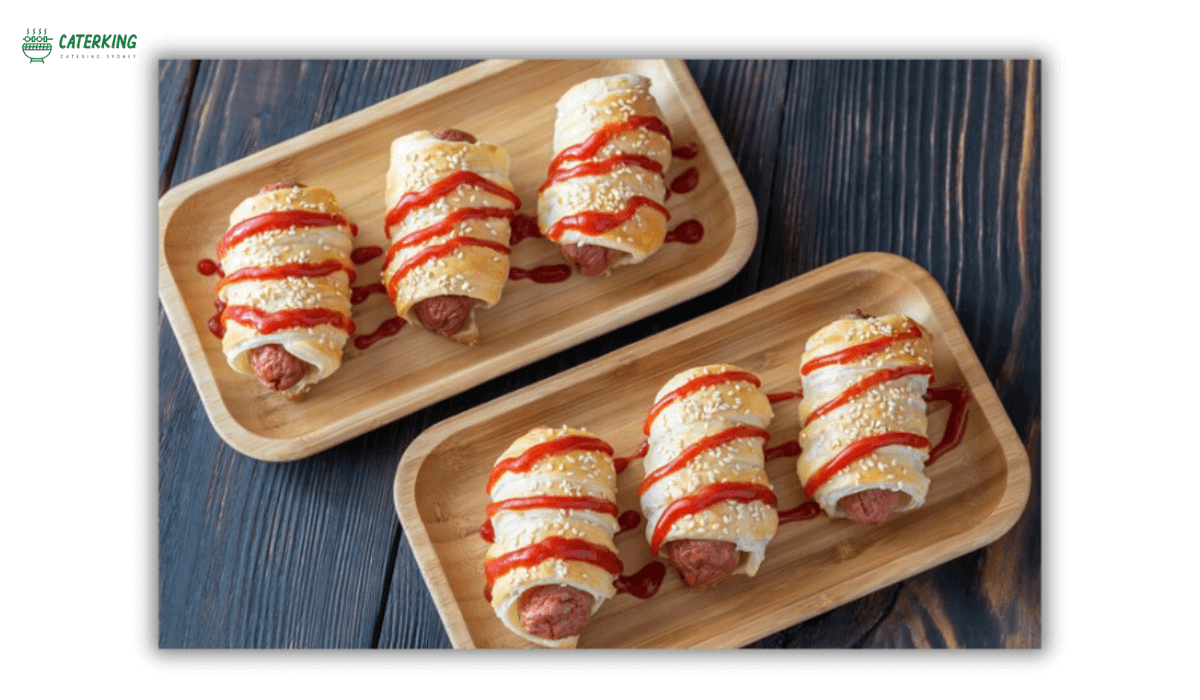
Cocktail sausage rolls (beef or pork and fennel) and mini meat pies remain the benchmark items in this category - they are immediately recognisable to Australian guests, pair naturally with tomato sauce or Dijon mustard, and work across demographics from casual birthday parties to corporate Friday afternoon drinks. Vegetarian variants filled with lentil and roasted vegetables, or Moroccan-spiced chickpea, have become standard inclusions on modern hot finger food menus to accommodate the growing proportion of plant-based guests at Sydney events.
Arancini
Arancini are deep-fried or oven-baked risotto balls, typically 4-5cm in diameter, coated in panko breadcrumbs and stuffed with a filling - most commonly mushroom and parmesan, mozzarella, or spinach and ricotta. They are a staple of Italian-inspired hot finger food platters and have become one of the highest-demand individual items at Sydney corporate and wedding events over the past five years.
The structural advantage of arancini as a hot finger food is the panko crust: it creates a heat-retaining outer shell that keeps the internal rice mixture warm for 15-20 minutes post-service, longer than most pastry-based items. The crust also provides a satisfying textural contrast - crisp exterior against the creamy, starchy interior - that registers as premium quality to guests even at a mid-range catering budget.
Skewers and Satays
Protein skewers - chicken teriyaki, lamb kofta, prawn with chilli, or tofu with miso glaze for vegan guests - are the most visually dramatic hot finger food format. The skewer handle eliminates the need for a plate entirely, making them the cleanest hand-held hot item available. They suit outdoor events, cocktail parties, and any setting where guests are standing and may not have a surface to set a plate down.
Marination is the key quality differentiator between a good skewer and a forgettable one. A minimum of 4 hours in a wet marinade (soy, garlic, ginger, acid, and a binding fat like sesame oil) produces measurably juicier, more flavourful meat than a dry rub applied at service. At catered events, skewers that have been marinated overnight are distinguishably better than same-day preparation, and experienced caterers in Sydney schedule skewer preparation the day before the event for this reason.
Spring Rolls and Dumplings
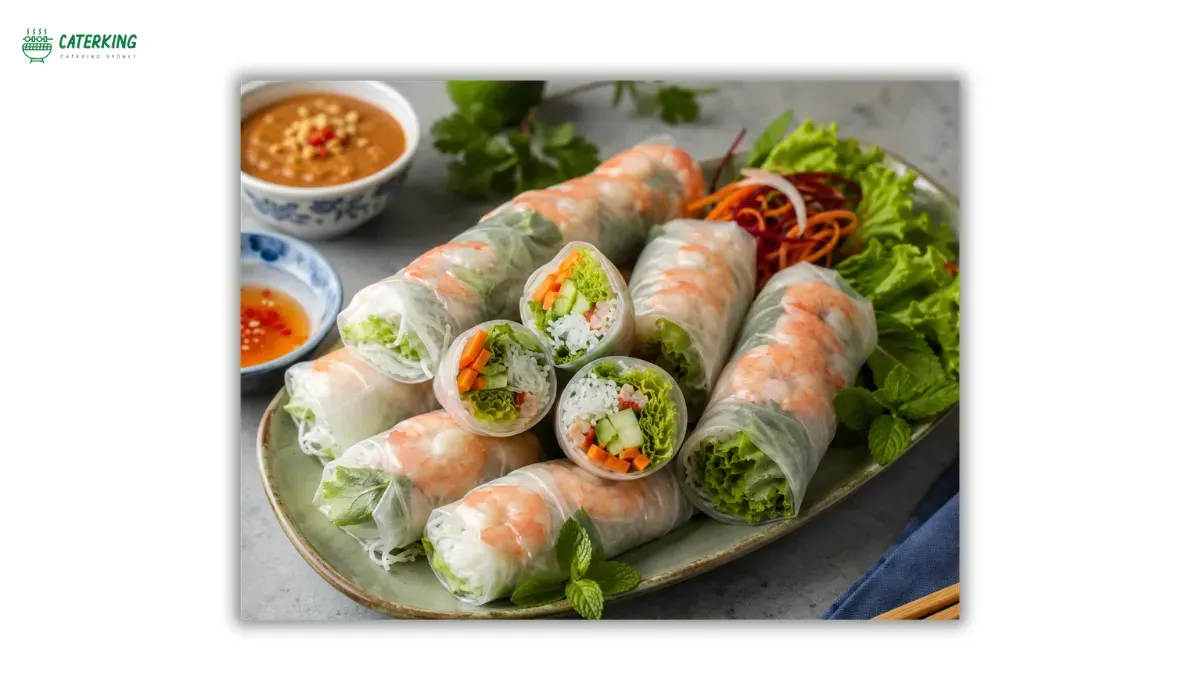
Deep-fried spring rolls and steamed or pan-fried dumplings represent the Asian-Australian fusion tier of hot finger food, which has become a dominant category in Sydney catering menus ,reflecting the city's multicultural dining culture. Spring rolls (vegetable, prawn, or chicken) provide a crisp, oil-crisped exterior that holds well for 10 minutes post-frying. Dumplings - whether gyoza-style pan-fried or Cantonese har gow steamed - offer a softer, more delicate texture profile.
The practical difference between spring rolls and dumplings for event catering is temperature hold time. A fried spring roll stays crisp for 8-12 minutes. A steamed dumpling stays at eating temperature for 6-8 minutes before cooling noticeably. For large-scale events where service cadence is slower, spring rolls are the more reliable choice. For smaller, more intimate events where dumplings can be passed directly from kitchen to guest, the texture and flavour payoff is higher.
Mini Sliders and Bao Buns
Mini sliders (a soft brioche or milk bun filled with a 40-50g patty, a condiment, and a leaf or pickled element) and steamed bao buns (a pillowy folded steam bun filled with braised pork, crispy chicken, or hoisin-glazed tofu) are the most substantial hot finger food items on a typical Sydney catering menu. Each one is closer to a 3-4 bite experience than the 2-bite standard for most finger food, which means they register as genuinely filling and reduce the number of total pieces per person required to satisfy guests.
Sliders suit corporate events, birthday parties, and casual outdoor events. Bao buns suit cocktail-style receptions, fusion menus, and any event where the host wants to differentiate the catering from a standard sausage-rolls-and-pies spread. Both formats require a warm holding environment (chafing dish or insulated container) to maintain bun texture during service - a bao bun that has dried out loses its signature softness and becomes structurally unpleasant to eat.
For a complete view of hot finger food menu options at Caterking, see thecatering hot food service page.
How Many Hot Finger Foods Per Person at an Event?
Portion planning for hot finger food depends on two variables: whether the finger food constitutes the only food at the event, and the duration of service. The standard Australian catering industry guidance, reflected across Sydney caterers, is:
- Cocktail event (finger food only, 2 hours): 4-5 hot pieces per person per hour - so 8-10 pieces total across a standard event
- Cocktail event alongside cold finger food (2-3 hours): 4-6 hot pieces total, with cold items making up the balance
- Pre-dinner canape round (45-60 minutes): 3-4 hot pieces per person alongside 2-3 cold pieces
These figures are per-person minimums. For events where dinner is not served afterward, caterers routinely plan for 20% additional hot pieces to account for guests returning for seconds on popular items. Sausage rolls, arancini, and sliders are the three items most likely to run out first at Sydney cocktail events - experienced caterers weight the order toward these formats when planning quantities for unknown guest appetite profiles.
For detailed quantity planning across all finger food formats, Caterking's how many finger foods per person guide breaks down portions by event type, duration, and guest count.
How to Build a Hot Finger Food Menu for a Sydney Event
Building a functional hot finger food menu requires decisions across four dimensions: dietary coverage, flavour variety, service logistics, and budget allocation. Choosing items randomly from a caterer's full menu without accounting for these dimensions produces a spread that looks generous but performs unevenly - popular items disappear within the first 30 minutes while less appealing options sit untouched.
Step 1 - Anchor with two to three universally appealing items. Sausage rolls, mini pies, and arancini are the items that satisfy the broadest range of guests at minimal dietary risk. These should form 50-60% of the total hot finger food volume.
Step 2 - Add one Asian-inspired item. Spring rolls, bao buns, or dumplings signal a modern, cosmopolitan menu and cater to Sydney's multicultural guest demographics. These items consistently drive positive feedback at post-event follow-ups.
Step 3 - Include at least one dedicated vegetarian or vegan hot option. A lentil sausage roll, a mushroom arancini, or a vegetable spring roll covers plant-based guests without requiring a separate platter or special service arrangement. Label it clearly.
Step 4 - Confirm venue heat management before finalising the menu. Items like sliders and bao buns require active warm holding. If the venue has no kitchen and no power source for chafing equipment, those formats are not viable. Pastry-based items and arancini have better passive heat retention and are more suitable for venues with limited kitchen infrastructure.
For structured hot finger food packages across corporate and social events, see Caterking's finger food catering service.
Hot Finger Food for Specific Events in Sydney
Corporate events
Corporate catering in Sydney prioritises tidy eating, dietary coverage, and a professional presentation. Hot savoury pastries, arancini, and chicken skewers hit all three criteria - they require no cutlery, produce minimal mess, and plate cleanly on white service ware. For corporate event catering that incorporates hot finger food, Caterking's corporate events and functions service provides structured menu frameworks.
Birthday parties
Birthday party hot finger food menus in Sydney tend to prioritise familiarity and crowd appeal over sophistication - sausage rolls, mini pies, spring rolls, and sliders are the formats that guests of all ages engage with most readily. For birthday catering that includes hot finger food, see Caterking's birthday catering service.
Weddings
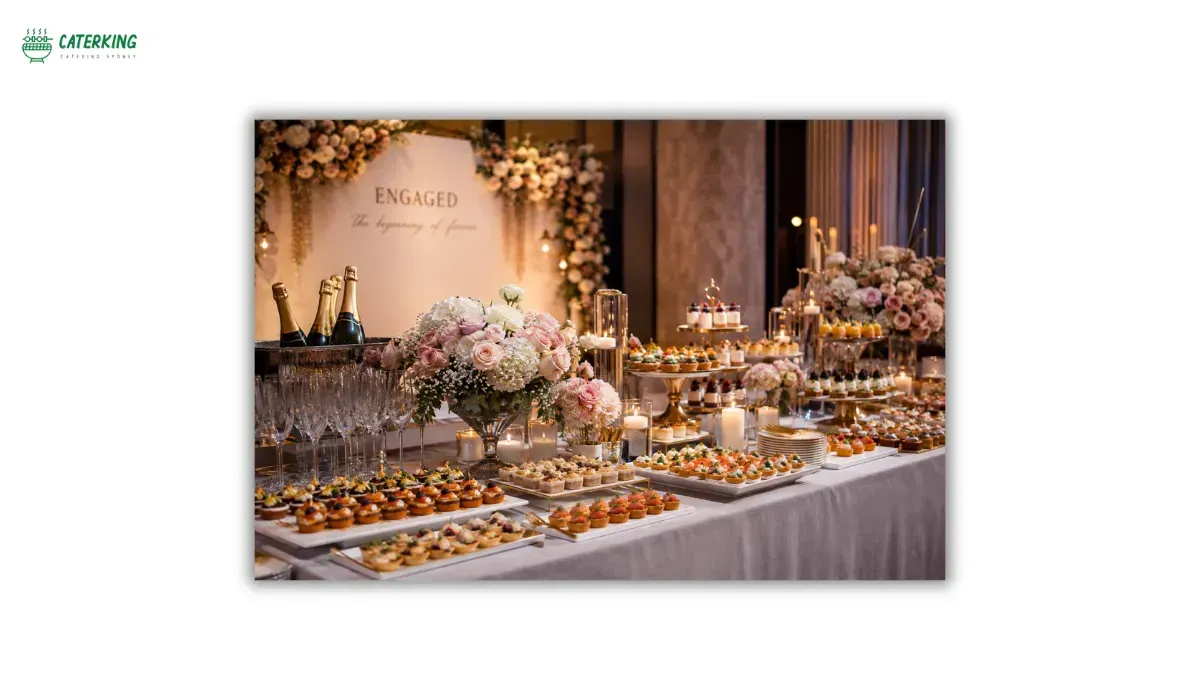
At wedding cocktail hours, hot finger food is passed by waitstaff to seated or standing guests. Passed service (rather than static platter service) maintains temperature more reliably and creates a higher-end service impression. Arancini, mini wagyu sliders, prawn skewers, and duck spring rolls are common premium-tier hot finger food formats for Sydney weddings. For a full wedding catering context, see Caterking's wedding catering service.
FAQs About Hot Finger Food
These are the questions most commonly asked by Sydney event hosts when planning a hot finger food menu. Each answer reflects current catering practice and Australian food safety standards.
What is the most popular hot finger food at Australian events?
The sausage roll is the highest-demand individual hot finger food item at Australian catered events, followed by arancini and mini meat pies. These three items appear on virtually every hot finger food menu across corporate, birthday, and wedding catering in Sydney - their familiarity and broad appeal make them the anchor items around which more adventurous options are built.
How do you keep hot finger food warm at an event?
Use chafing dishes with water trays and Sterno fuel to maintain hot items above 60°C during service. For passed finger food, insulated trays with lids keep items at a temperature during service rotations. Items should never sit on a static platter at ambient temperature for more than 30 minutes - below 60°C, hot finger food enters the food safety danger zone (5-60°C) where bacterial growth accelerates. Professional caterers in Sydney maintain temperature logs during service for compliance with NSW Food Authority standards.
Can hot finger food be ordered for a large event?
Yes - hot finger food scales to any guest count, but large events (150+ guests) require careful planning around simultaneous service. For 200 guests receiving 8 hot pieces each across a 2-hour event, that is 1,600 individual pieces requiring coordinated kitchen output and temperature management. Professional caterers manage this through staggered batch cooking, insulated transport, and a floor rotation schedule that ensures hot items reach every guest within 10-15 minutes of leaving the kitchen. For large-event finger food catering enquiries, see Caterking's contact page.
What is the difference between hot finger food and canapes?
Hot finger food is a broader category that includes any warm, hand-held, bite-sized catering item. Canapes are a specific subset of finger food - typically a small, single-bite item (3-4cm) with a structured base (blini, crostini, pastry cup) and a topped garnish, designed for formal cocktail service. A sausage roll is hot finger food but not a canapé. A smoked duck on a wonton crisp with pickled daikon is a hot canape. The distinction matters for event formality - canape service signals a premium, fine-dining-adjacent experience, while general hot finger food signals a relaxed, generous, crowd-focused event.
Planning a hot finger food menu for your next Sydney event?
Contact Caterking
to discuss options, quantities, and availability.
Let Catering Sydney elevate your catering experience - Get in touch with us now!
You might also like