Chinese vs Korean Food: Key Differences and Comparisons
Chinese vs Korean food comparison involves analyzing two distinct Asian culinary traditions that share historical connections but developed unique characteristics. Chinese cuisine spans thousands of years with regional variations across 8+ major cuisines. Korean cuisine developed through geographic isolation and neighboring influences, creating a distinct flavor profile centered on fermentation. Knowing these differences helps food enthusiasts appreciate each cuisine's unique contributions to Asian cooking.
For comprehensive Asian food catering, explore Asian food catering options that offer both Chinese and Korean cuisine selections across Australia.
KEY TAKEAWAYS
- Korean cuisine emphasizes fermentation: kimchi, doenjang, and gochujang define the flavor profile
- Chinese cuisine varies by region: Cantonese, Sichuan, Hunan, Shanghai each have distinct characteristics
- Kimchi differs significantly, Korean uses brine fermentation, Chinese uses direct salting
- Jajangmyeon originated in China and Korean version became national comfort food
- Rice cakes (tteok) differ, Korean uses mainly rice flour, Chinese uses glutinous rice
- Spice usage differs, Korean gochugaru vs Chinese Sichuan peppercorn
- Dining etiquette varies, Korean communal dining vs Chinese individual portions
Chinese vs Korean Food Overview
Chinese and Korean cuisines share historical connections through trade and cultural exchange but developed distinct characteristics shaped by geography, climate, and cultural priorities.

Chinese Culinary Traditions
Chinese cuisine developed across thousands of years with regional variations reflecting local ingredients and cooking techniques. Major regional cuisines include Cantonese (dim sum, steamed fish), Sichuan (mapo tofu, kung pao chicken), Hunan (smoky, spicy dishes), Shanghai (sweet, oily preparations), and Shandong (seafood focus).
Chinese cooking emphasizes wok hei (breath of the wok), achieved through high heat and rapid cooking. Sauces develop quickly, with soy sauce, rice wine, and vinegar providing the foundation for savory dishes. Chinese cuisine uses five spice (cinnamon, cloves, Sichuan peppercorn, star anise, fennel) as a signature blend.
The philosophy in Chinese cooking balances flavors within dishes, often incorporating sweet and sour, savory and mild combinations. Meals typically feature multiple dishes shared family-style, with rice as the foundation.
Korean Culinary Traditions
Korean cuisine developed through centuries of geographic isolation and Chinese influence, creating a distinct culinary identity. The cuisine centers on fermentation, with kimchi, doenjang (fermented soybean paste), and gochujang (red chili paste) forming the flavor backbone.
Korean cooking uses gochugaru (red chili flakes) rather than whole chilies, creating depth without overwhelming heat. The cuisine emphasizes banchan (side dishes), with multiple small plates accompanying rice and main proteins. Korean dining centers on communal eating from shared dishes, with rice bowls served individually.
The philosophy in Korean cooking balances the five elements (wood, fire, earth, metal, water) through color, cooking technique, and ingredient selection. Every meal includes kimchi as the essential accompaniment.
Kimchi Comparison
Kimchi represents a fundamental difference between Korean and Chinese fermentation traditions. The two styles produce distinctly different products despite using similar vegetables.
For larger gatherings requiring Korean cuisine, explore Korean food catering options that offer authentic kimchi and Korean dishes across Australia.

Korean Kimchi
Korean kimchi is fermented Napa cabbage prepared with gochugaru, garlic, ginger, fish sauce, and Brady. The process uses brine fermentation over 2-4 weeks, creating complex sour and spicy flavors.
The base requires brining Napa cabbage in salt water for several hours. The paste (ssaengchae) combines gochugaru, fish sauce, oyster sauce, sugar, minced garlic, and ginger. The paste is applied between cabbage leaves generously.
Fermentation occurs at room temperature for 2-3 days, then refrigerated. Korean kimchi develops complex flavors over weeks, with the fermentation creating lactic acid bacteria beneficial for gut health.
Traditional Korean kimchi uses only vegetables, salt, chili, and seasonings. The technique produces the signature sour-spicy-salt flavor profile associated with Korean cuisine.
Chinese Sauerkraut-Style Kimchi
Chinese-style kimchi (known as pao cai or 酸菜) differs significantly from Korean versions. The Chinese approach uses direct salt application without brine fermentation, producing milder results.
Chinese kimchi preparation involves salting vegetables directly, sometimes with Sichuan peppercorn added. The vegetables are packed tightly and left to ferment for days rather than weeks. The result tastes saltier and less sour than Korean kimchi.
Sichuan-style kimchi (泡菜) incorporates Sichuan peppercorn and chili oil, producing numbing-spicy flavor distinct from Korean versions. The texture remains crunchier due to shorter fermentation time.
The key difference lies in fermentation method: Korean kimchi uses brine fermentation with specific spice paste. Chinese kimchi uses direct salting with shorter fermentation
| Aspect | Korean Kimchi | Chinese Kimchi |
|---|---|---|
| Fermentation | Brine-based, 2-4 weeks | Direct salt, 2-5 days |
| Main spice | Gochugaru | Sichuan peppercorn |
| Flavor | Sour-spicy-salt | Saltier, less sour |
| Texture | Softer from longer fermentation | Crunchier |
| Base | Napa cabbage | Various vegetables |
Jajangmyeon Comparison
Jajangmyeon (炸酱面) demonstrates how Korean cuisine adapted a Chinese dish into a national comfort food with distinct characteristics.
For events requiring Asian cuisine, explore Asian cuisine catering options that include both Korean and Chinese noodle dishes across Australia.

Korean Jajangmyeon
Korean jajangmyeon is a noodle dish with black bean sauce, originating from Chinese zha jiang mian. The dish became embedded in Korean culture as the meal eaten on Black Day (April 14) for single people.
Korean jajangmyeon uses chunjang (black bean paste), a sweet, slightly bitter paste made from fried wheat flour and caramel color. The sauce combines chunjang with diced pork, onions, zucchini, and sometimes potatoes. The dish serves over thick wheat noodles with pickled radish on the side.
The sauce preparation involves frying chunjang in oil until it turns black, then adding vegetables and pork. The result is a thick, sweet-savory sauce coating chewy noodles.
Korean jajangmyeon differs from Chinese versions through the use of chunjang (specific Korean product) and the inclusion of potatoes in the sauce. The dish is distinctly Korean despite Chinese origins.
Chinese Zha Jiang Mian
Chinese zha jiang mian is the original dish that inspired Korean jajangmyeon. The Chinese version uses different sauce preparations depending on regional variation.
Beijing-style zha jiang mian features zhajiang (fried sauce) made from fermented soybeans or sweet noodle sauce. The sauce combines ground pork with fermented bean paste, creating savory-sweet flavor.
Shanghai-style versions use different bean pastes with sweeter profiles. The noodles are typically hand-pulled or cut thin. Fresh cucumbers and bean sprouts accompany the dish.
The Chinese versions emphasize savory-sweet balance without the caramel bitterness found in Korean chunjang. The noodles are thinner and the sauce less thick than Korean preparations.
| Aspect | Korean Jajangmyeon | Chinese Zha Jiang Mian |
|---|---|---|
| Bean paste | Chunjang (sweet, bitter) | Various fermented pastes |
| Noodle | Thick wheat | Thin hand-pulled |
| Vegetables | Zucchini, potato, onion | Cucumber, bean sprouts |
| Occasion | Black Day, delivery food | Regional specialty |
| Flavor | Sweet-savory with bitterness | Savory-sweet |
Rice Cake Comparison
Rice cakes (糕) in Chinese and Korean cuisines differ significantly in ingredients, preparation methods, and cultural applications.
For comprehensive Korean cuisine needs, explore Korean cuisine catering services that offer authentic tteok and traditional Korean dishes.

Korean Tteok
Korean tteok (떡) is rice cake made primarily from short-grain rice flour. The preparation involves steaming or pounding rice into various shapes, creating chewy texture.
Types of tteok include: Garaetteok (cylindrical, for slicing), tteokbokki (cubed, for spicy stir-fry), Songpyeon (half-moon, for Lunar New Year), and Siru tteok (steamed, layered).
Tteokbokki is the most internationally recognized Korean rice cake: cubed rice cakes simmered in gochujang sauce with fish cakes and scallions. The dish represents Korean street food culture.
Korean rice cakes use glutinous rice (chapssal) mixed with regular rice, creating the characteristic chewiness. The flour is moistened, steamed, then pounded or shaped.
Chinese Rice Cakes
Chinese rice cakes (年糕, niangao) are typically made from glutinous rice (sticky rice) rather than regular rice. The texture is denser and more substantial than Korean versions.
Types include: Niangao (chewy rice cake, sliced for cooking), Tangyuan (glutinous rice balls, sweet soup), Mooncake (savory-sweet pastry), and Ba bing (fried rice cake).
Chinese rice cakes for Lunar New Year (Niangao) are sliced thin and stir-fried with vegetables and meat. The dish symbolizes progress and advancement for the coming year.
The Chinese versions use higher proportion of glutinous rice, creating stickier texture. Steaming creates dense, substantial cakes rather than the fluffy Korean varieties.
| Aspect | Korean Tteok | Chinese Niangao |
|---|---|---|
| Main ingredient | Short-grain rice flour | Glutinous rice |
| Texture | Chewy, soft | Dense, sticky |
| Common use | Steamed, pounded | Sliced, stir-fried |
| Sweet dishes | Songpyeon, dessert | Tangyuan soup |
| Savory dishes | Tteokbokki, soup | Niangao stir-fry |
Key Culinary Differences
Chinese and Korean cuisines differ in fundamental approaches to flavor, cooking techniques, and dining customs.
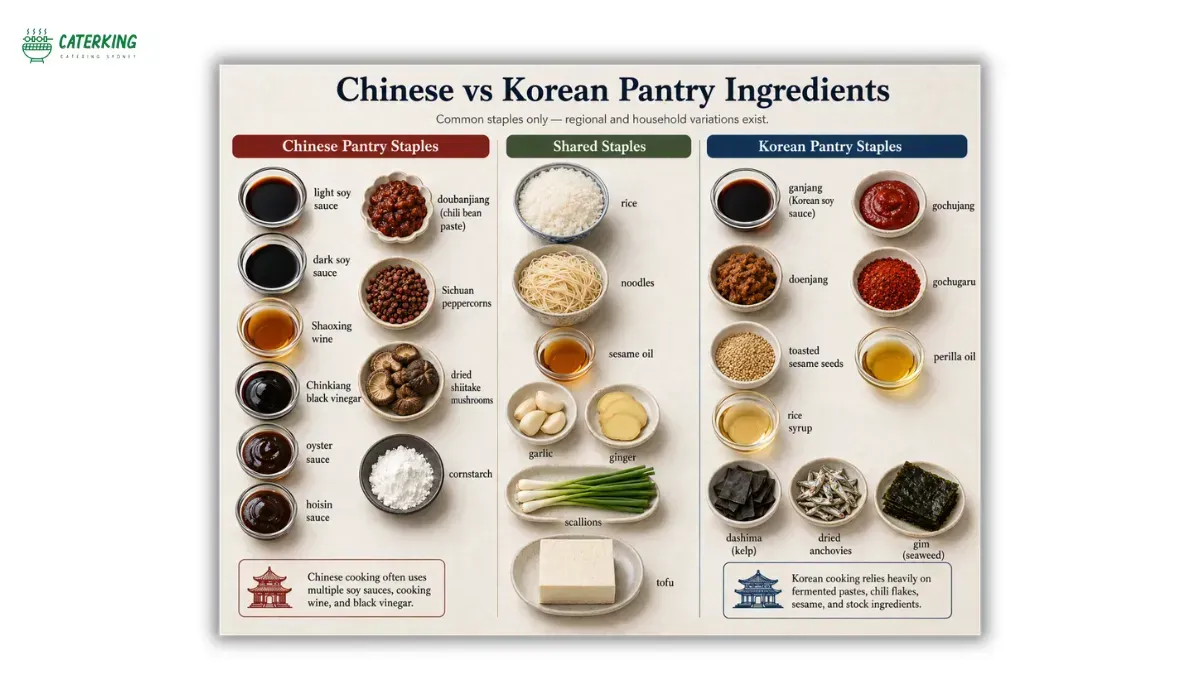
Flavor Foundations
Korean cuisine builds flavors through fermentation: kimchi provides sour-spicy base, doenjang adds deep umami, gochujang contributes smoky heat. The cuisine emphasizes simultaneous sweet, sour, salty, bitter, and spicy elements in single dishes.
Chinese cuisine varies by region but generally builds flavors through sauces: soy sauce, rice wine, vinegar, and sugar create balanced profiles. The cuisine emphasizes wok cooking for smoky flavor and quick cooking for fresh ingredients.
The spice approach differs significantly: Korean cuisine uses gochugaru flakes and fresh garlic prominently. Chinese cuisine relies on Sichuan peppercorn (numbing-spicy), star anise, and five spice powder.
Dining Etiquette
Korean dining centers on communal eating from shared dishes placed at table center. Rice bowls are individual. Side dishes (banchan) circulate freely. The eldest person begins eating first. Both hands stay visible above table during meals.
Chinese dining features multiple shared dishes (通常 6-12) arranged family-style. Chopsticks and soup spoons serve all dishes. Tea refills are customary. The host or eldest person begins eating. Complete emptying of a dish indicates desire for more.
Staple Foods
Rice forms the foundation of both cuisines but in different preparations. Korean rice is typically plain, short-grain, steamed. Chinese rice varies by region: plain for southern China, wheat noodles for northern regions.
Wheat consumption differs significantly: Korean cuisine uses wheat primarily for noodles (jajangmyeon, kalguksu). Chinese cuisine incorporates wheat extensively through dumplings, buns, pancakes, and hand-pulled noodles.
FAQs About Chinese vs Korean Food
Common questions arise when comparing Chinese and Korean cuisines. These answers address specific concerns with practical guidance.
Is kimchi originally from Korea or China?
Yes, kimchi as a concept (fermented vegetables) exists in multiple Asian cultures including Chinese, Korean, and Japanese (as Tsukemono).
Korean kimchi developed its distinct characteristics through specific preparation methods and flavor profiles. The Korean version uses brine fermentation with gochugaru, creating unique sour-spicy flavor. Chinese versions vary regionally but generally use shorter fermentation and different spices. Korean kimchi is considered a distinct preparation rather than Chinese import.
What is the main difference between Korean and Chinese food?
The main differences center on flavor foundations and cooking philosophy. Korean cuisine builds flavors through fermented ingredients (kimchi, doenjang, gochujang).
Chinese cuisine builds flavors through sauces (soy sauce, oyster sauce, chili oil). Cooking techniques differ: Korean cuisine emphasizes simmered and grilled preparations. Chinese cuisine emphasizes wok cooking and steaming. The dining approach differs: Korean cuisine features multiple small banchan shared communally. Chinese cuisine features multiple large dishes shared family-style.
Can I substitute Chinese rice cakes for Korean tteok?
No, Chinese niangao and Korean tteok differ in texture and behavior during cooking. Korean tteok is softer and chewier, absorbing sauces easily in dishes like tteokbokki.
Chinese niangao is denser and stickier, requiring longer cooking times and different sauce ratios. Substituting one for the other produces noticeably different results. Korean tteok works best in Korean recipes. Chinese niangao suits Chinese preparations.
Which cuisine uses more spice?
Korean cuisine uses chili more prominently through gochugaru flakes, creating consistent background heat in many dishes.
Chinese cuisine varies by region: Sichuan cuisine uses Sichuan peppercorn extensively, Hunan cuisine features fresh chilies, Cantonese cuisine uses minimal chili. Overall, Korean cuisine provides more consistent spice presence across dishes. Chinese cuisine offers greater variety in spice types but less consistent heat levels.
What is the difference between jajang and zha jiang?
jajang (Korean) and zha jiang (Chinese) differ in sauce composition and noodle type. Korean jajang uses chunjang paste, a sweet, slightly bitter sauce unique to Korean cuisine.
Chinese zha jiang uses various fermented bean pastes without the caramel bitterness. Korean versions add potatoes and zucchini to the sauce. Chinese versions use cucumber and bean sprouts as accompaniments. The noodles differ: Korean jajang uses thick wheat noodles, Chinese versions use thin hand-pulled noodles.
Is Korean food healthier than Chinese food?
Yes, health comparison depends on specific preparations rather than cuisine type. Korean cuisine's emphasis on fermentation provides probiotic benefits through kimchi and doenjang.
Vegetables appear prominently through banchan. Chinese cuisine's regional variety offers both healthy and unhealthy options. Cantonese cuisine emphasizes fresh ingredients and minimal processing. Sichuan cuisine uses more oil and chili. Both cuisines can be healthy or unhealthy depending on specific dish choices and cooking methods.
For events requiring Asian cuisine catering, explore event catering services that offer Chinese and Korean food options across Australia.
Let Catering Sydney elevate your catering experience - Get in touch with us now!
You might also like