Corporate Meeting Catering: How to Feed Clients and Teams
Most catering failures in a corporate catering setting have nothing to do with the food itself. A tray of sandwiches arriving fifteen minutes into a client pitch, or a vegetarian guest left with a single bowl of carrot sticks at the end of a buffet, is a planning failure, not a culinary one. The food at a corporate meeting signals to clients how seriously you take the relationship, gives teams the energy to sustain concentration across long sessions, and shapes the atmosphere of a room within the first five minutes.
This guide covers every practical decision in planning corporate meeting catering: which format to choose based on your meeting type, how much food to order per person, how to manage dietary requirements without complicating the logistics, and what the catering setup should look like depending on your room and group size.
Key Takeaways
- Budget $15 to $30 per person for morning or afternoon tea; $30 to $55 for a standard corporate meeting lunch
- Match the catering format to the meeting objective: working lunches suit finger food; client meetings suit plated or grazing; all-day workshops need structured meal breaks
- Allow 4 to 5 finger food pieces per person for a 60 to 90 minute meeting; 1 main and 2 sides per person for a working lunch
- Collect dietary requirements at least 48 hours before the event, not on the day
- Order catering for 1.15 to 1.2 times your confirmed headcount to account for late additions and larger appetites
- Timing is the variable most corporate catering fails on: food arriving during a meeting is more disruptive than food arriving five minutes before
Why Meeting Catering Affects Outcomes
The effect of food on cognitive performance during extended meetings is measurable. Blood glucose decline begins after approximately 90 minutes without food, producing reduced concentration, slower decision-making, and increased irritability in meeting participants. This has a direct, practical effect on whether decisions made in a long session are actually sound ones. It is a planning variable, not a wellness afterthought.
Catering quality also signals investment in a way few other event details do. A client walking into a boardroom to find a coffee machine and a plate of supermarket biscuits receives a different message than one arriving to find a properly set grazing table with labelled options and fresh seasonal ingredients. The latter communicates that their time and presence has been prepared for. The distinction costs less than most people assume and lands more consistently than almost any other event detail.
Matching the Catering Format to Your Meeting Type
The single most consequential decision in corporate meeting catering is not what to order, but which format to use. The format determines how the food integrates with the meeting structure, how guests interact with each other and the food, and how much the catering draws attention to itself.
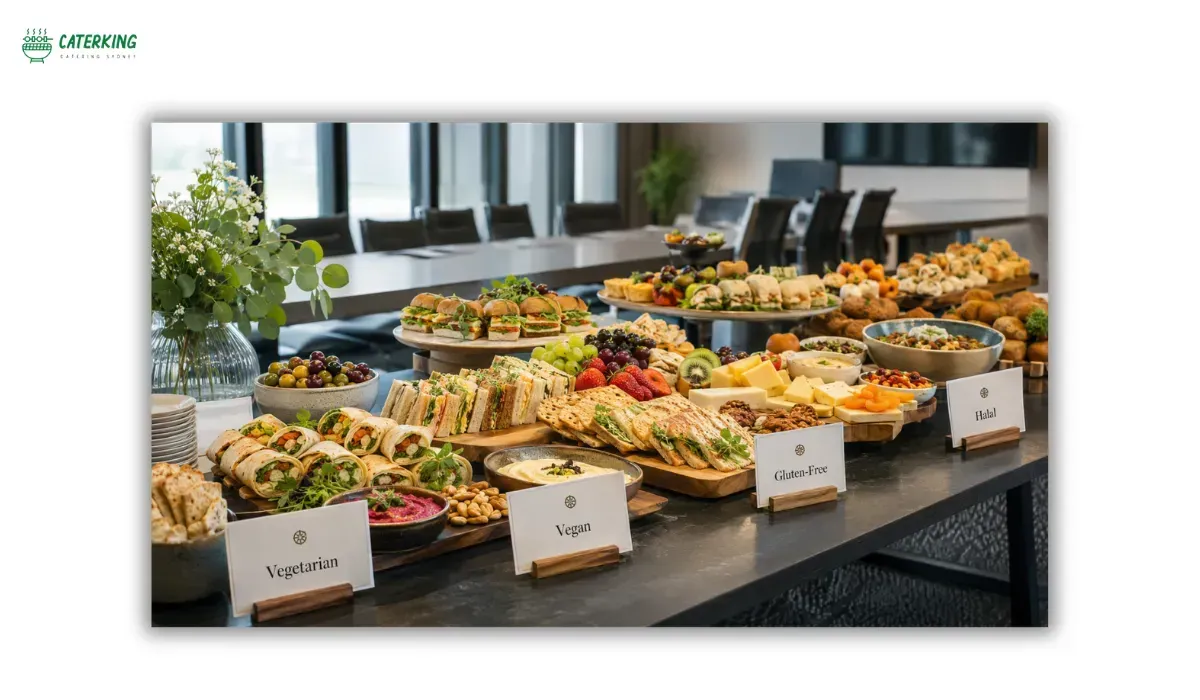
Boardroom and executive meetings require food that is unobtrusive and easy to eat without creating noise or mess. Finger food, small sandwiches, and individually portioned items work here. A bowl of soup, a saucy pasta, or anything requiring significant cutlery use is wrong for a meeting where the primary focus is the conversation. Grazing platters positioned along a side surface allow attendees to help themselves without disrupting the table setup or the agenda.
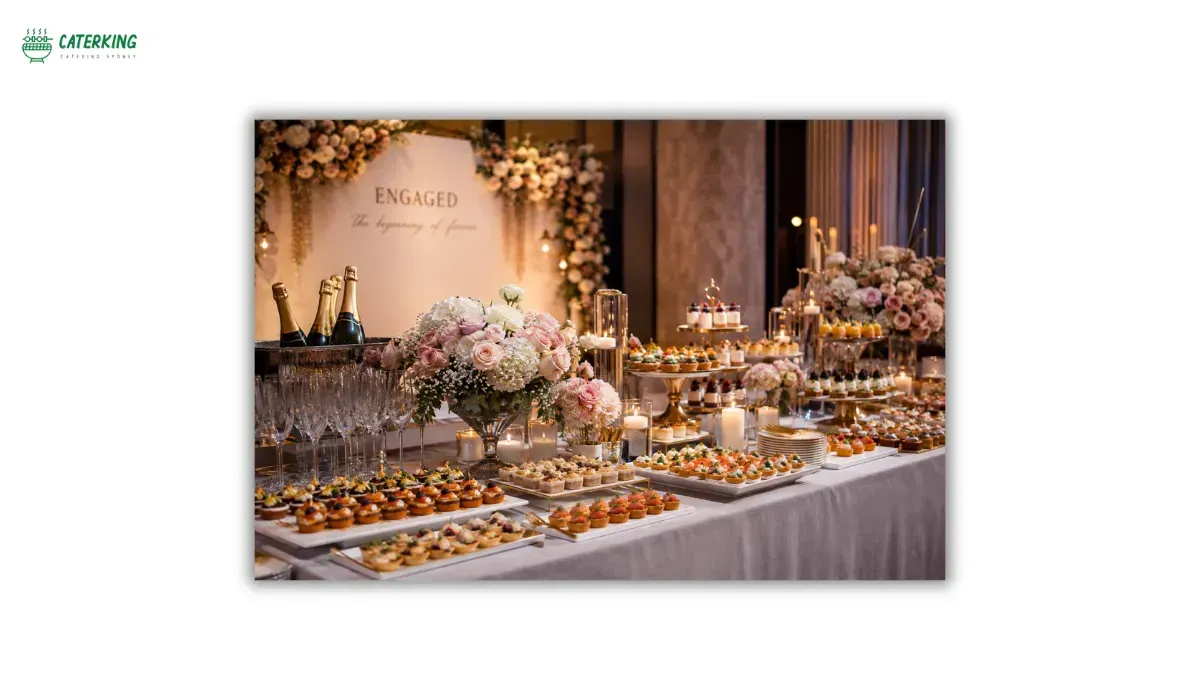
Client entertainment and pitch meetings call for a more deliberate presentation. This is the context where food works as a signal of quality and care. A styled grazing table with clearly labelled seasonal ingredients, or individually plated lunch boxes with premium components, communicates investment. Generic deli trays and heat-lamp sausage rolls communicate the opposite. A common scenario in Sydney's CBD business district: a financial services team hosting a pitch meeting swaps a standard deli platter for a styled grazing table with labelled dietary categories. Same budget, but a noticeably different impression in the room.
Training days and workshops have structured meal breaks, which means the catering format can be more substantial. A buffet works well here: it serves large groups quickly, allows people to return for more without causing disruption, and gives individuals control over their portions. The risk with buffets in workshop contexts is timing: food sitting in chafing dishes for more than 30 minutes degrades quickly. Coordinating the service window tightly with the session schedule prevents this.
All-hands meetings and company-wide events require volume and variety above all else. The format needs to feed a large number of people efficiently within a limited window and accommodate the widest possible range of dietary preferences. A combination of hot and cold buffet stations, clearly labelled by dietary category, serves this context better than any single-format approach.
Networking events and product launches are canapé and finger food territory. The food needs to be easy to eat while standing, holding a drink, and maintaining a conversation. Four to six pieces per person per hour is the standard allocation. The variety across the selection should be wide enough that every guest finds something suitable, including dedicated vegetarian, vegan, and gluten-free options as clearly labelled separate items.
| Meeting Type | Recommended Format | Avoid |
|---|---|---|
| Boardroom (5 to 15 people) | Finger food, individual platters, grazing board | Buffets, hot mains, soup |
| Client pitch or entertainment | Styled grazing table, individual boxes, plated | Generic deli trays |
| Training day or workshop | Buffet with hot and cold options | Finger food only |
| All-hands or company event | Combined hot and cold buffet stations | Single format for large groups |
| Networking or product launch | Canapés, finger food, passed items | Plated or seated meals |
| Working lunch (desks or table) | Boxed lunches, individual portions | Shared platters requiring serving |
How Much Food to Order for Corporate Meeting Catering
Under-ordering is the most common corporate catering mistake. The second most common is over-ordering without a clear plan for what happens to the surplus. Both are avoidable with a consistent per-head calculation adjusted for the time of day and meeting length.
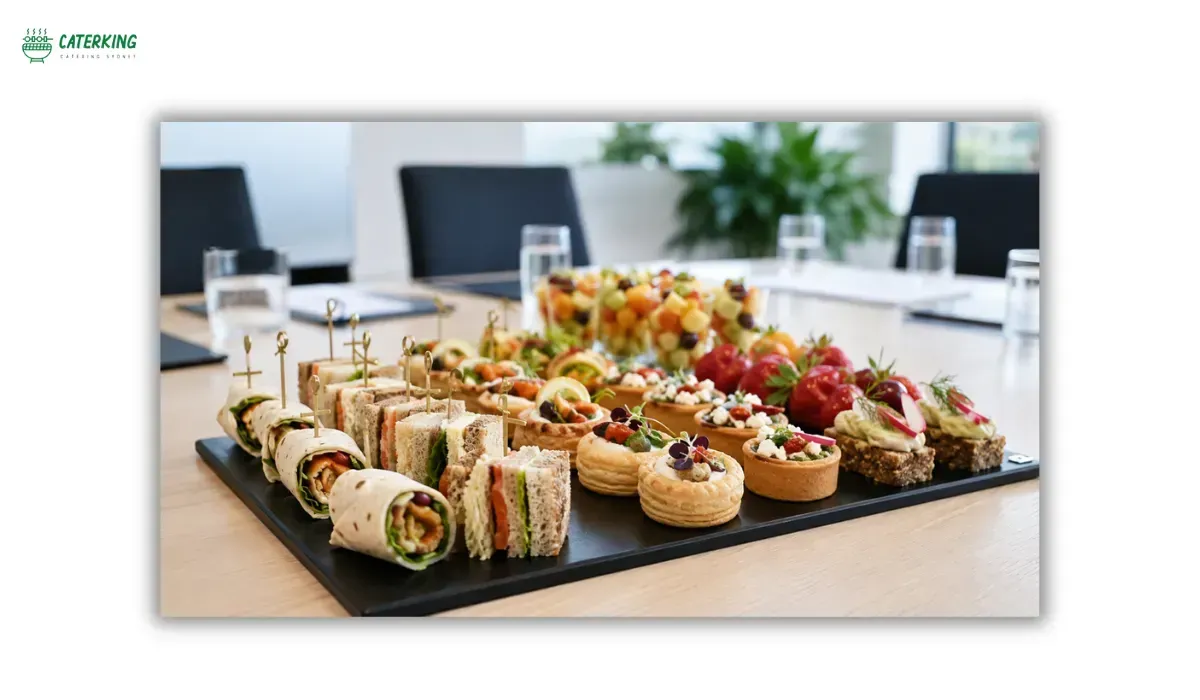
Time of day drives appetite more than any other variable. Guests arriving at a 12pm working lunch have not eaten since breakfast and will approach the food as a full meal. Guests at a 10am morning tea meeting have typically eaten breakfast within the last two hours and are looking for a snack. A 5pm to 7pm networking event lands in the "danger zone": guests are leaving work hungry and will eat meaningfully more than the finger food portion sizing typically anticipates.
| Meeting Context | Finger Food (pieces per person) | Meal Equivalent |
|---|---|---|
| 60 to 90 min morning tea | 4 to 5 pieces | Light snack |
| 2 to 3 hour mid-morning session | 6 to 8 pieces | Substantial snack |
| Working lunch (1 to 1.5 hours) | 1 main + 2 sides | Full meal |
| Half-day workshop with meal break | 1 main + 2 sides + light snack | Full meal + snack |
| Full-day workshop | Morning tea + lunch + afternoon tea | Multiple meals |
| Evening networking (5pm to 7pm) | 8 to 12 pieces | Near-full meal equivalent |
A practical buffer rule used consistently by Australian corporate caterers: order for 115% to 120% of your confirmed headcount. If 20 guests are confirmed, order for 23 to 24. This absorbs last-minute additions, the colleague who joins unexpectedly, and the three people who go back for seconds. It does not create significant surplus.
Managing Dietary Requirements for Corporate Events
Dietary requirements in a corporate group are not edge cases. They are predictable at scale. In a group of 20 Australian professionals, expect approximately 2 to 3 vegetarians, 1 to 2 vegans or plant-based eaters, 1 to 2 people with gluten sensitivity or coeliac disease, and potentially 1 to 2 people with halal or kosher requirements depending on the composition of the team.
The practical management approach that eliminates most dietary catering problems:
Collect requirements at least 48 hours before the event, not on the day. A brief question in the meeting invitation or calendar booking, such as "Please note any dietary requirements," gives the caterer time to prepare appropriate alternatives. Same-day dietary accommodation is possible but compromises quality and creates unnecessary stress.
Label everything, including the items that contain common allergens. A grazing table or buffet where guests can see at a glance which items are gluten-free, which are vegan, and which contain nuts removes the need for every person with a dietary requirement to ask someone about every item they consider picking up.
Do not treat dietary alternatives as afterthoughts. A single small bowl of carrot sticks at the end of a grazing table is not a vegetarian option. It is a signal that vegetarian guests were not considered. Dietary alternatives should be integrated into the menu as genuinely appealing items, not separated into a corner.
Communicate requirements to the caterer with specificity. "Vegetarian" covers a wide range. Confirm whether any guests are vegan (no dairy or eggs), lacto-vegetarian (dairy acceptable), or ovo-lacto vegetarian. A caterer who receives clear, specific information delivers meaningfully better results than one working from vague instructions.
Catering Formats for Different Budget Levels
Corporate meeting catering costs in Australia vary significantly by format, service level, and catering provider. The ranges below reflect standard market pricing in 2025 and are exclusive of GST.
| Format | Budget per Person (AUD) | What It Typically Includes |
|---|---|---|
| Drop-off platters / boxed lunches | $15 to $30 | Pre-prepared food, no service staff, self-setup |
| Staffed finger food service | $35 to $55 | On-site setup, service, pack-down |
| Grazing table catering | $40 to $65 | Styled setup, seasonal produce, labelled |
| Buffet (hot and cold) | $45 to $70 | Full meal, replenishment, staffed service |
| Spit roast catering | $40 to $65 | On-site cooking, carving, sides, staffed |
| Premium plated or individual boxes | $55 to $90 | Restaurant-quality, individually packaged |
For all-day conference catering covering morning tea, lunch, and afternoon tea, budget $55 to $80 per person inclusive of all three service windows. This is the format where the per-head cost looks highest but the per-meal cost is actually competitive with drop-off alternatives when calculated across the full day.
Why Spit Roast Works Well for Corporate Events
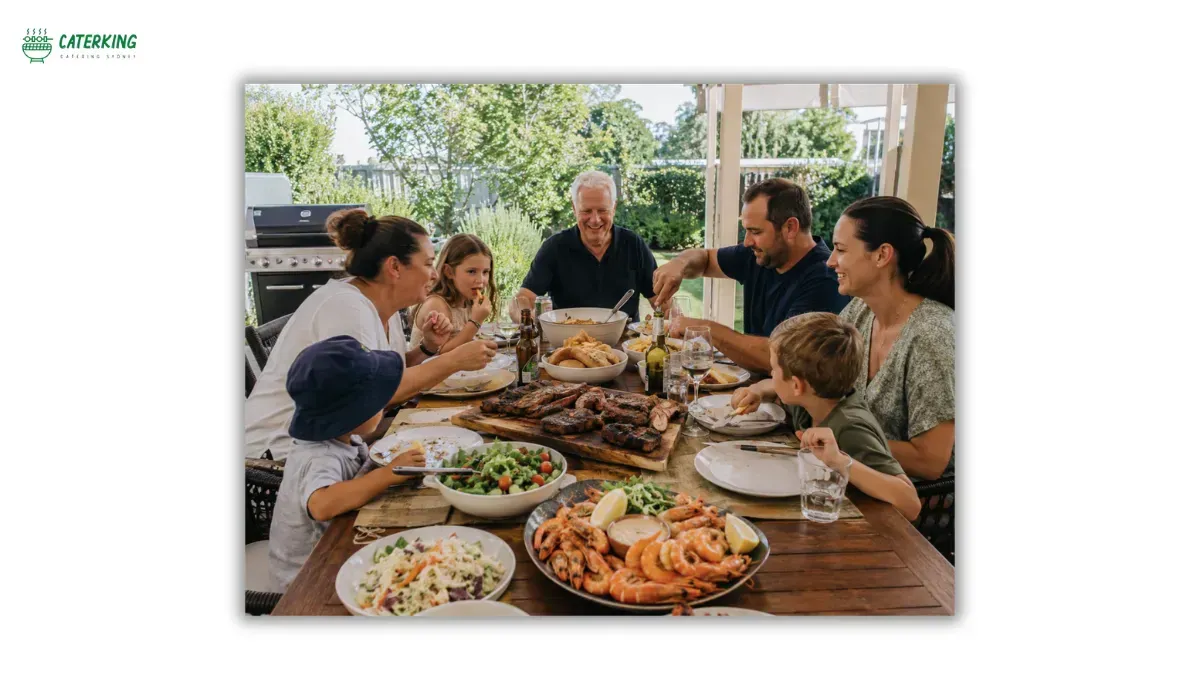
Spit roast catering is often filed under "outdoor events and backyard gatherings" and left out of the corporate conversation entirely. For end-of-year functions, off-site team days, product launches with outdoor components, and any large corporate event where the goal is a relaxed, celebratory atmosphere rather than formal dining, it delivers several specific advantages that other formats do not.
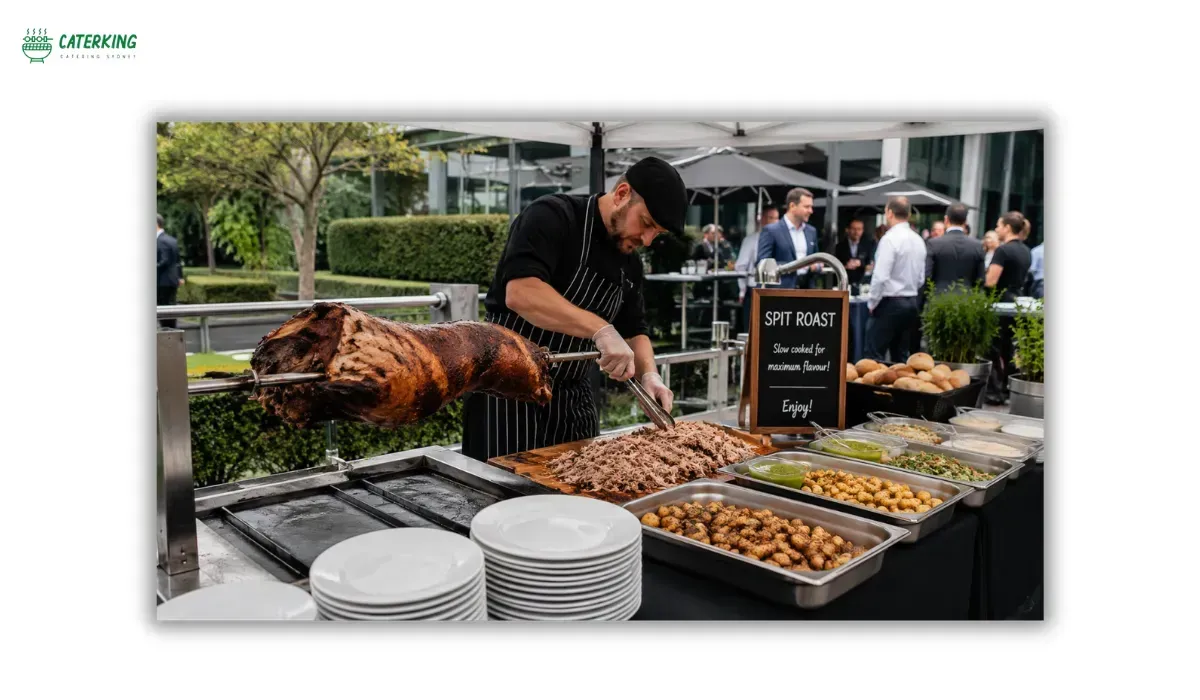
The on-site cooking element creates visible, aromatic activity that draws people together and gives guests something to gravitate toward. This is particularly effective at networking events and team celebrations where breaking the ice is part of the brief. A carving station where guests can see fresh meat being sliced serves this function far more effectively than a platter arriving pre-portioned from a kitchen.
Spit roast catering also scales efficiently for large corporate groups. A single spit can feed 60 to 80 people as a main course component, and the format suits buffet-style service that moves large groups through quickly. An end-of-year function for a mid-size Sydney business (say 70 to 100 staff at an off-site venue) is a typical fit: a spit roast main paired with a buffet of sides covers the volume without the bottlenecks a plated service would create at that headcount.
For corporate events in the Sydney area, Cater King provides spit roast catering with professional on-site cooking and service, suited to both outdoor and large-venue corporate functions, as part of its broader Corporate Catering events offering. Packages can be discussed based on your guest count and event brief.
Timing and Logistics: Where Corporate Catering Most Often Fails
Food quality is the factor most corporate event organisers focus on. Timing is the factor that most often determines whether the catering feels successful or not.
Food arriving during a meeting, rather than set up and ready before guests arrive, is more disruptive to the meeting experience than almost any food quality issue. The sound of trolleys, the smell of hot food arriving, and the visual distraction of setup happening while a presentation is underway pulls attention away from the session. Catering should be in place and ready to serve before attendees enter the room.
The practical logistics sequence for a boardroom or meeting room event:
- Confirm delivery address, floor, and access point with the caterer at least 48 hours before the event, not on the day
- Arrange building access and a parking or loading dock space for the catering vehicle
- Provide a clear service window: the caterer needs to be fully set up and out of the room 10 to 15 minutes before guests arrive
- Confirm whether the caterer handles pack-down or whether your team manages it
- For events using shared corporate kitchenettes or servery areas, confirm what equipment is available on-site versus what the caterer provides
For multi-session events such as conference days with morning tea and lunch, brief the caterer on the session schedule so food service windows can be timed to conference breaks rather than forcing breaks to align with catering logistics.
Planning Checklist: Corporate Meeting Catering
Use the following checklist when organising corporate meeting catering to avoid the most common planning failures:
8 to 14 days before:
- Confirm guest count and meeting duration
- Identify the meeting type and choose the appropriate format
- Request quotes from caterers with your format, headcount, date, and venue
- Confirm budget per head and total catering budget
3 to 5 days before:
- Send dietary requirements to caterer with specific detail
- Confirm delivery time, access point, and setup requirements
- Confirm whether the caterer provides serving equipment or whether you arrange it
- Order for 115 to 120 percent of confirmed headcount
Day before:
- Reconfirm delivery time and building access
- Brief the caterer on any schedule changes to the meeting
Day of:
- Have a point of contact available at the delivery location 30 minutes before the catering window
- Confirm the caterer is set up and clear of the room before guests arrive
- Check that dietary items are clearly labelled and separated from items containing allergens
FAQs About Corporate Meeting Catering
Planning a corporate meeting and still working through the details? These questions address the most common practical concerns from event coordinators, executive assistants, and office managers booking catering across Australian corporate environments.
How much does corporate meeting catering cost per person in Australia?
Budget $15 to $30 per person for morning or afternoon tea catering and $30 to $55 per person for a working lunch, depending on format and service level. Drop-off platters sit at the lower end; staffed catering with setup and pack-down sits at the upper end. All-day conference catering covering morning tea, lunch, and afternoon tea typically runs $55 to $80 per person inclusive of all service windows.
How much food should I order per person for a corporate meeting?
For a 60 to 90 minute morning meeting, allow 4 to 5 finger food pieces per person. For a working lunch, plan for 1 main dish and 2 sides per person. For a 5pm to 7pm networking event, allow 8 to 12 finger food pieces per person, since guests arriving after work are significantly hungrier than those attending a mid-morning session. Always order for 115 to 120 percent of your confirmed headcount to absorb late additions.
What is the best catering format for a boardroom client meeting?
A styled grazing table or individually packaged premium lunch boxes are the most reliable formats for client meetings. Both communicate preparation and quality without requiring disruptive service during the meeting itself. Finger food and sandwiches work for shorter sessions; a more substantial spread suits meetings scheduled across a standard lunch window. Avoid formats requiring significant cutlery use or producing noise during the meeting.
How do I handle dietary requirements for a corporate event?
Collect dietary requirements at least 48 hours before the event via a simple question in the meeting invitation or calendar booking. Pass specific requirements to your caterer in writing. Ensure all catering items are labelled on the day, including allergen information. Treat dietary alternatives as genuinely appealing menu components rather than afterthoughts placed at the edge of a platter.
How far in advance should I book corporate meeting catering?
For a standard office meeting catering order under 30 people, 2 to 3 business days notice is generally sufficient with most providers. For large-scale corporate events above 50 people, or events requiring staffed service and setup, 1 to 2 weeks notice is recommended. For all-day conferences or events with complex dietary or logistics requirements, 2 to 3 weeks allows adequate planning time and reduces the risk of availability issues.
When should food be set up for a corporate meeting?
Catering should be fully set up and service-ready before attendees enter the room, typically 10 to 15 minutes before the meeting start time. Catering arriving and being set up while a meeting is in progress is the single most disruptive catering timing failure in corporate environments. Brief your caterer clearly on the room access window and the meeting start time as two distinct reference points.
Can spit roast catering work for a corporate event?
Yes, for the right context. Spit roast is well suited to end-of-year functions, team day events, product launches with outdoor components, and large corporate gatherings where a relaxed, celebratory atmosphere is the goal. The on-site cooking element creates visible activity and draws people together effectively at networking events. It is not appropriate for formal boardroom settings or client meetings requiring unobtrusive food service.
Call To Action
Getting corporate meeting catering right comes down to three decisions: the right format for the meeting type, the right quantity for the time of day, and a delivery timeline that has food ready before guests walk in. Get those three right and the catering stops being a variable to worry about.
For businesses in Sydney planning their next boardroom meeting, client pitch, or end-of-year function, Cater King offers tailored Corporate Catering events with packages built around your guest count, format, and budget.
Let Catering Sydney elevate your catering experience - Get in touch with us now!
You might also like