Mediterranean Platter Guide 2026 | Mezze Ideas & Recipe
A Mediterranean platter solves the eternal entertaining question: how do you feed a crowd something impressive without spending an entire day in the kitchen? This grazing-style spread combines bold flavours, colourful ingredients, and interactive dining that suits Australian summer gatherings, winter dinner parties, and everything between. Australian caterers report 67% increase in Mediterranean platter requests for events over the past two years, reflecting a shift toward relaxed yet sophisticated entertaining.
This guide covers everything from essential components and beginner recipes to professional arrangement techniques and Australian sourcing options. Whether you build your own board or delegate to a
catering service, you will have a clear path to Mediterranean success.
Key Takeaways
- An authentic mezze platter requires 8-10 components spanning dips, proteins, breads, and extras
- DIY Mediterranean platters cost approximately $30-50 for 4-6 people in ingredients
- Catering services in Melbourne and Sydney charge $50-80 per head for premium mezze spreads
- Most components can be prepared 2-3 days ahead with proper storage
- Top specialty ingredient shops exist in Sydney's Auburn, Melbourne's Footscray, and online
- Platters work for groups ranging from 2 to 50+ people with simple scaling
- Presentation matters more than perfection in ingredients
What is a Mediterranean Platter (Mezze)?
Mezze (sometimes spelled "meze") represents a tradition of small dishes served across the Mediterranean region, from Greece and Turkey through Lebanon, Syria, and North Africa. Unlike a simple appetiser plate, a mezze spread functions as the meal itself, encouraging grazing, sharing, and extended social dining.
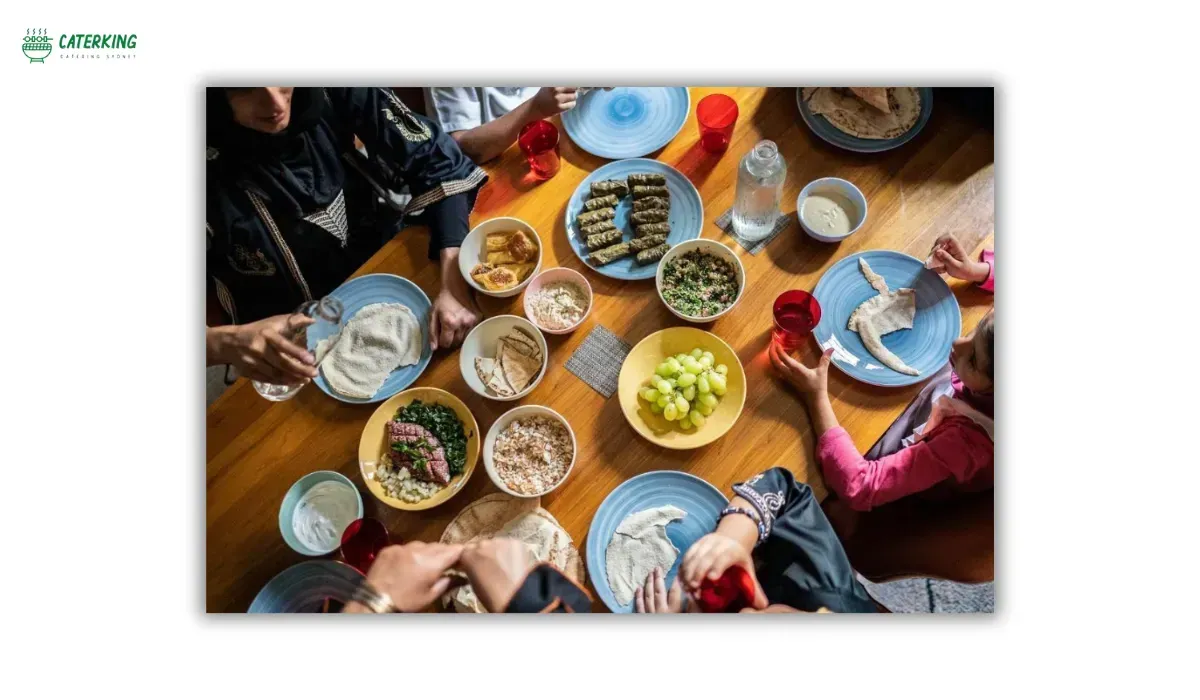
The word "mezze" comes from the Persian "mazzeh," meaning "taste" or "relish." Middle Eastern hospitality traditions transformed this concept into elaborate spreads where hosts present dozens of dishes, ensuring guests never feel hungry while encouraging conversation around the table.
Origins of Mezze Culture
Families across the Mediterranean developed mezze as a social dining ritual. In Lebanon, "table of 40 dishes" symbolises abundance and welcome. Greek mezedes, Turkish meze çeşitleri, and Israeli mazot all follow similar principles: variety, freshness, and communal eating.
Australian diners first encountered Mediterranean spreads through Greek and Lebanese immigration in the 1970s and 1980s. Today, Mediterranean cuisine ranks among the most popular dining choices in major Australian cities, with Melbourne alone hosting over 200 Greek tavernas and countless Lebanese restaurants.
Why Mediterranean Platters Are Trending in Australia
Several factors drive Mediterranean platter popularity in Australia. First, the format suits Australian lifestyle. Outdoor entertaining, casual gatherings, and relaxed dining expectations align perfectly with mezze culture. Second, Mediterranean ingredients suit Australian climate and food preferences. Olive oil, fresh vegetables, grilled proteins, and bold cheeses match what Australian diners already enjoy. Third, Mediterranean platters accommodate dietary requirements easily. Vegetarian, vegan, and gluten-free options emerge naturally from the component-based structure.
Essential Components of an Authentic Mediterranean Platter
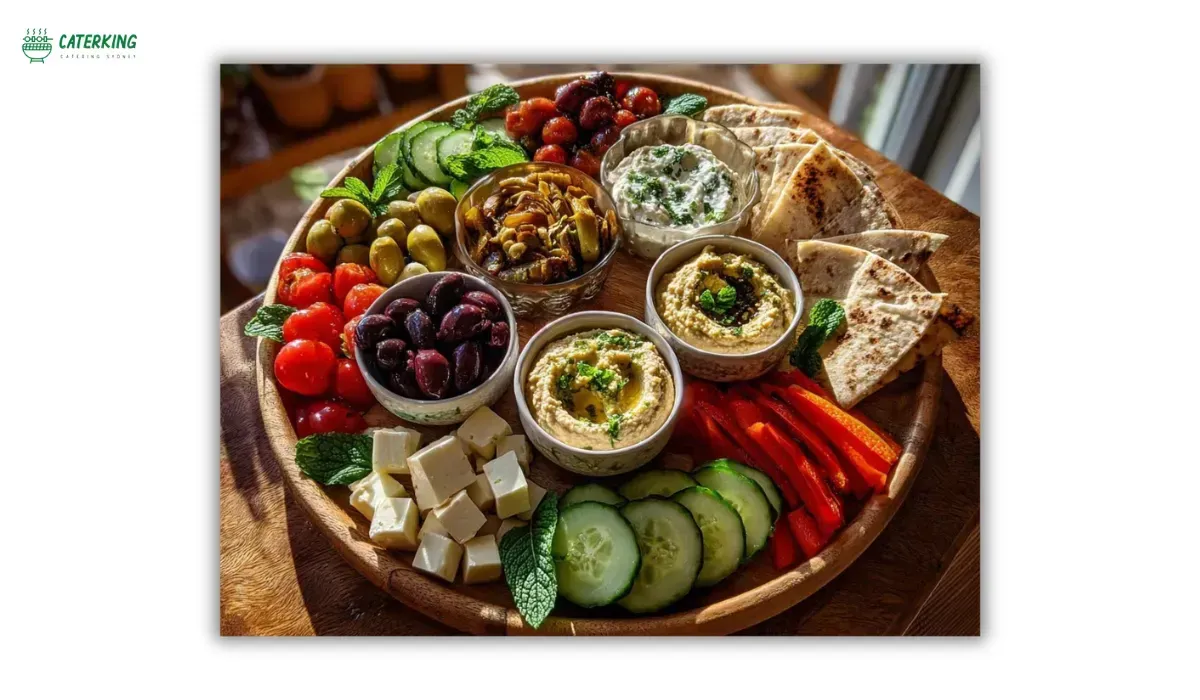
A successful Mediterranean platter requires balance across five categories: dips, proteins, carbohydrates, vegetables, and extras. Missing categories create imbalanced boards that look sparse or lack variety.
Dips
Dips form the centrepiece of most Mediterranean platters. Plan for 2-3 dips representing different flavour profiles.
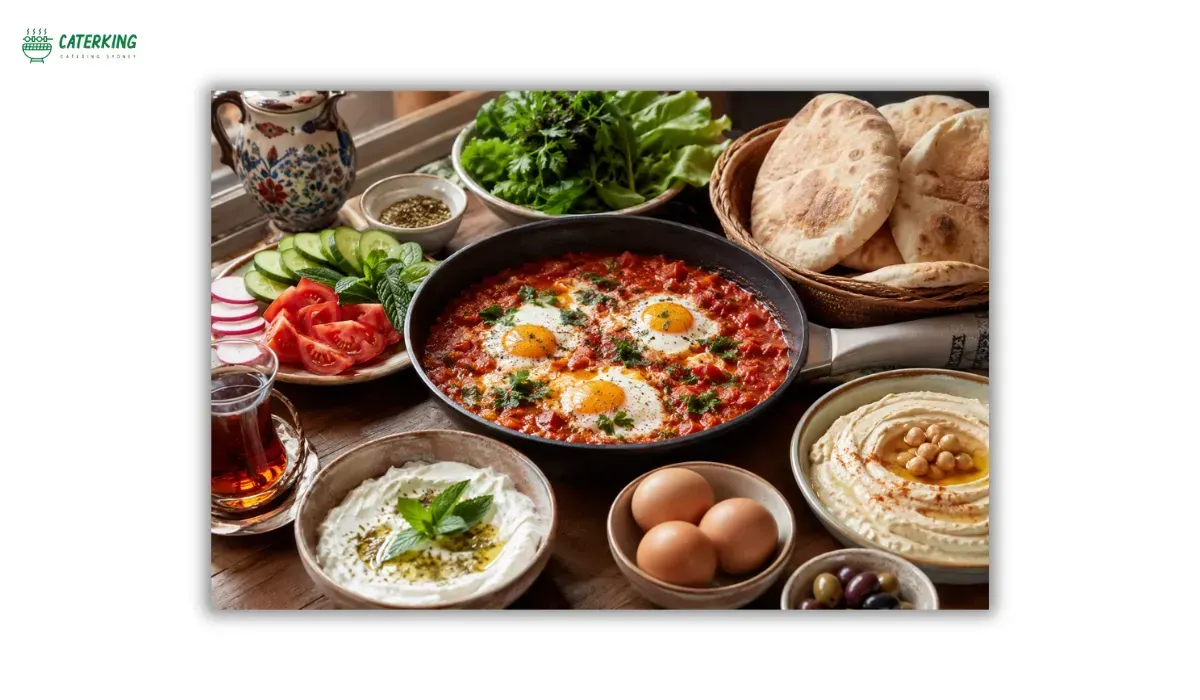
Hummus remains the essential foundation. This tahini and chickpea blend provides creamy texture that complements most other elements. Baba ganoush adds smoky depth from fire-roasted eggplants. Tzatziki delivers cool, refreshing contrast with cucumber and yoghurt. Tzatziki pairs particularly well with grilled proteins and warm pita bread.
Melbourne caterers recommend including at least one red dip, such as roasted pepper hummus or muhammara, to create visual contrast against the creamier white and beige options.
Proteins
Proteins transform a vegetable plate into a satisfying meal. Options range from plant-based to meat-heavy selections.
Falafel provides the classic vegetarian protein option. These crispy chickpea fritters deliver substance without requiring cooking on the day. Grilled halloumi cheese offers a unique Mediterranean experience unavailable in most non-specialty restaurants. Australian supermarkets stock halloumi in the deli section, typically priced at $12-16 per pack.
For meat options, kofta skewers, lamb slices, and grilled chicken pieces work well. Prepare proteins up to two days ahead and store refrigerated. On serving day, bring proteins to room temperature before arranging on the platter.
Breads and Carbohydrates
Bread serves as the delivery mechanism for every dip and spread. Quality and variety matter more than quantity.
Pita bread rounds serve as the universal carrier. Warm pita briefly in the oven (2-3 minutes at 180°C) for best texture. Turkish flatbread (lavaş) offers a thinner, more flexible alternative. Briam crackers and lavos provide crisp options for harder dips and spreads.
For a premium touch, include grissini (breadsticks) and warm flatbreads. Sydney specialty shops stock fresh Turkish bread baked daily, which elevates any platter significantly.
Fresh and Pickled Vegetables
Vegetables provide colour, crunch, and freshness that balances richer elements.
Cherry tomatoes, cucumber slices, and radishes offer familiar favourites. More adventurous options include roasted artichoke hearts, pickled turnips (common in Lebanese cuisine), and fresh fig halves when in season.
Australian supermarkets stock most common vegetables year-round. Specialty shops add value with imported items such as sun-dried tomatoes, roasted peppers in oil, and preserved lemons.
Olives and Extras
Olives represent a non-negotiable Mediterranean element. Plan for 2-3 olive varieties with distinct colours and flavours.
Kalamata olives from Greece deliver bold, fruity flavour. Green stuffed olives (with pimento or feta) provide visual interest. Castelvetrano olives offer mild, buttery flavour that appeals to olive skeptics.
Additional extras include dukkah (Egyptian nut and spice blend for dipping in olive oil), marinated feta cheese cubes, roasted chickpeas, and pomegranate seeds for colour.
Mediterranean Platter Recipes for Beginners
Making dips from scratch costs approximately $8-12 in ingredients and produces significantly better results than supermarket alternatives. Each recipe below serves 4-6 people as part of a larger platter.
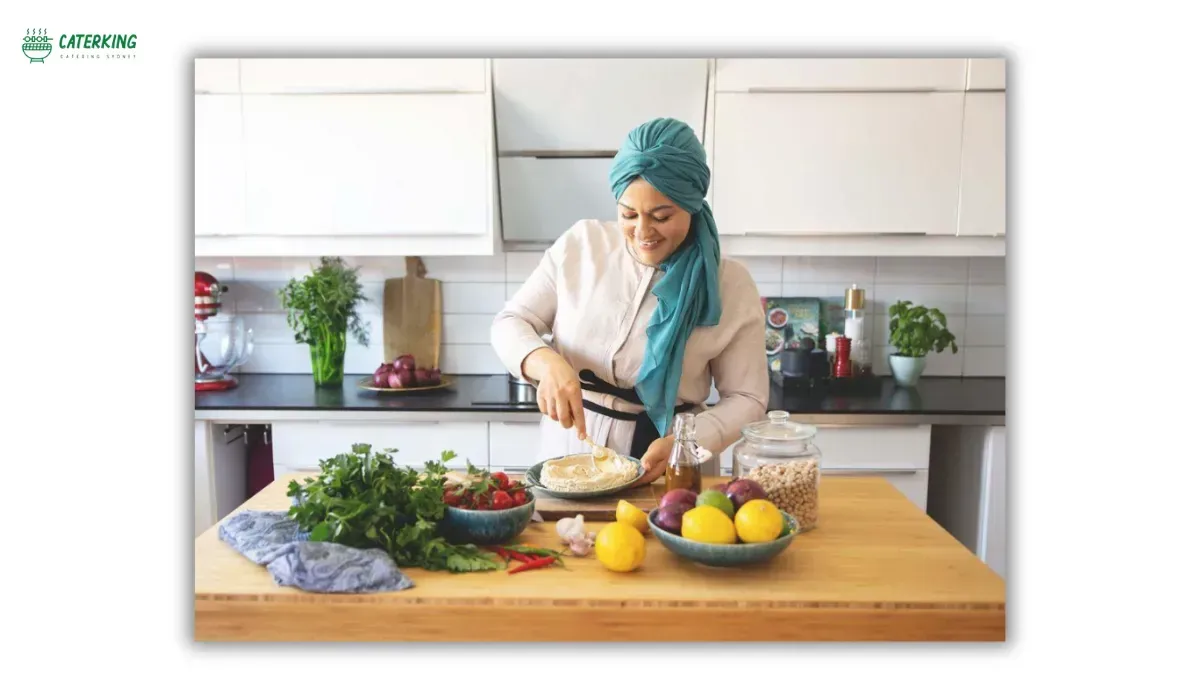
Classic Hummus in 10 Minutes
Place 400g canned chickpeas (drained, liquid reserved), 60g tahini, 2 tablespoons lemon juice, 1 garlic clove, and ½ teaspoon salt in a food processor. Blend for 60 seconds until smooth. With the motor running, slowly add reserved chickpea liquid until desired consistency forms. Taste and adjust lemon or salt. Drizzle with olive oil and sprinkle with paprika before serving.
Proper hummus requires tahini quality. Look for unhulled tahini from brands such as Soom or Mayyet at specialty shops. Budget tahini produces bitter results.
Creamy Tzatziki Recipe
Grate 1 large cucumber and squeeze out excess moisture through a clean kitchen towel. Combine cucumber with 300g Greek yoghurt, 2 crushed garlic cloves, 2 tablespoons olive oil, 1 tablespoon lemon juice, and ½ teaspoon salt. Mix thoroughly and refrigerate for at least 30 minutes before serving. Tzatziki tastes better after resting overnight, making this an ideal make-ahead component.
Use full-fat Greek yoghurt for authentic thickness. Australian brands such as Jalna and Farmers Union produce excellent results.
Baba Ganoush from Scratch
Pierce 2 large eggplants with a fork and roast directly on a gas flame or under a high grill for 15-20 minutes, turning until the skin chars completely and the flesh collapses. Alternatively, roast in a 200°C oven for 45 minutes until very soft. Let cool completely.
Split the eggplants and scoop out flesh. Drain excess liquid through a sieve. Mash with
2 tablespoons tahini,
1 crushed garlic clove,
2 tablespoons lemon juice, and
½ teaspoon salt. Drizzle with olive oil and garnish with pomegranate seeds or fresh herbs.
Where to Buy Mediterranean Ingredients in Australia?
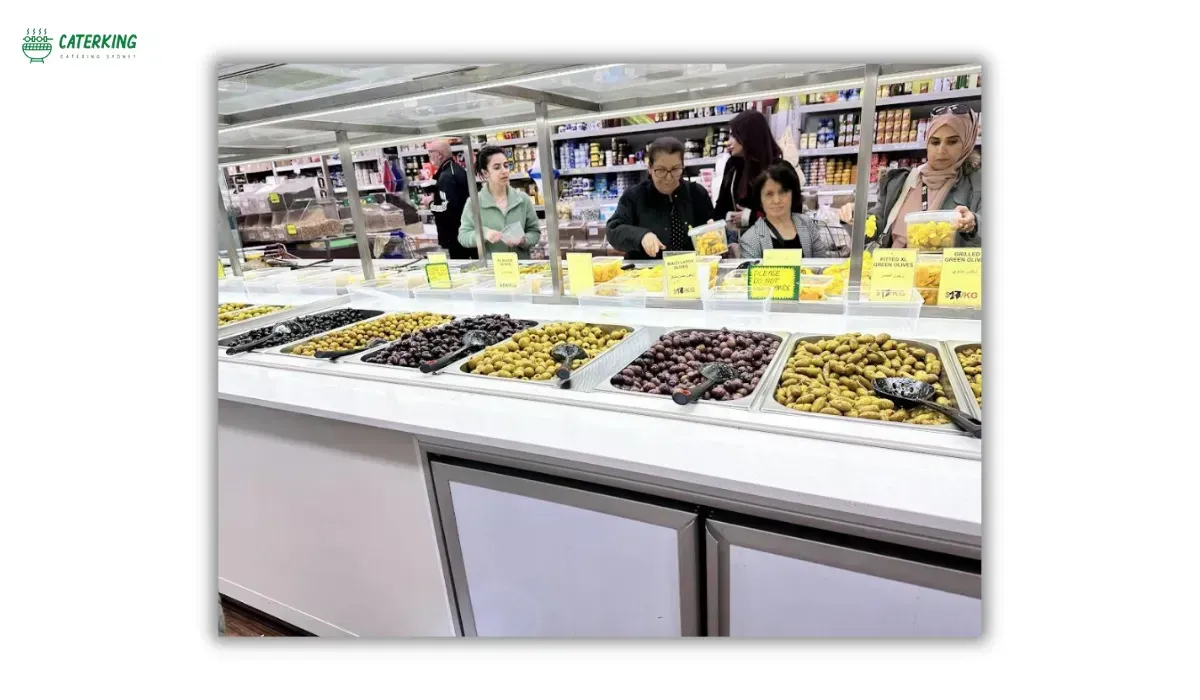
Australia's major cities host excellent specialty shops where quality ingredients cost less than imported supermarket brands. Here is where to find authentic Mediterranean products.
Specialty Middle Eastern Shops
Sydney's Auburn suburb hosts the highest concentration of Middle Eastern grocers in Australia. Shops such as Cedar Bakery and Alsaddak provide fresh bread, quality spices, and specialty items unavailable elsewhere. Parking is ample, and staff regularly help customers select appropriate ingredients for their needs.
Melbourne's Footscray market area offers similar variety with strong Vietnamese and Middle Eastern influences. Al Pak Meats and various Ethiopian and Lebanese shops stock hard-to-find items. Park in the side streets rather than the main shopping strip for easier access.
Brisbane's Sunnybank and Eight Mile Plains suburbs contain growing Mediterranean and Middle Eastern shopping precincts. Expect slightly higher prices than Sydney or Melbourne but excellent quality.
Online Suppliers
Several online retailers ship Mediterranean ingredients nationally with refrigeration where required.
The Good Food Shop (goodfoodshop.com.au) stocks hard-to-find items including tahini brands, za'atar, sumac, and quality olives. Orders over $99 qualify for free shipping.
The Spice House Australia offers specialty spices and spice blends including za'atar, sumac, allspice, and baharat. Small quantities suit home cooks who do not want large packages of unfamiliar ingredients.
Major Supermarket Alternatives
Coles and Woolworths have expanded Mediterranean sections significantly over the past five years. Look for:
- Whittingtons tahini (available in most stores)
- Gourmet Garden herb pastes in the produce section
- Meredith Dairy sheep and goat cheese products
- Obela hummus and dips (reasonable quality for quick solutions)
Supermarket ingredients work for casual platters but cannot match specialty shop quality for important events.
How to Arrange a Mediterranean Platter Like a Pro?
Arrangement matters more than most people realise. A professionally arranged platter draws attention and creates appetite even before tasting begins.
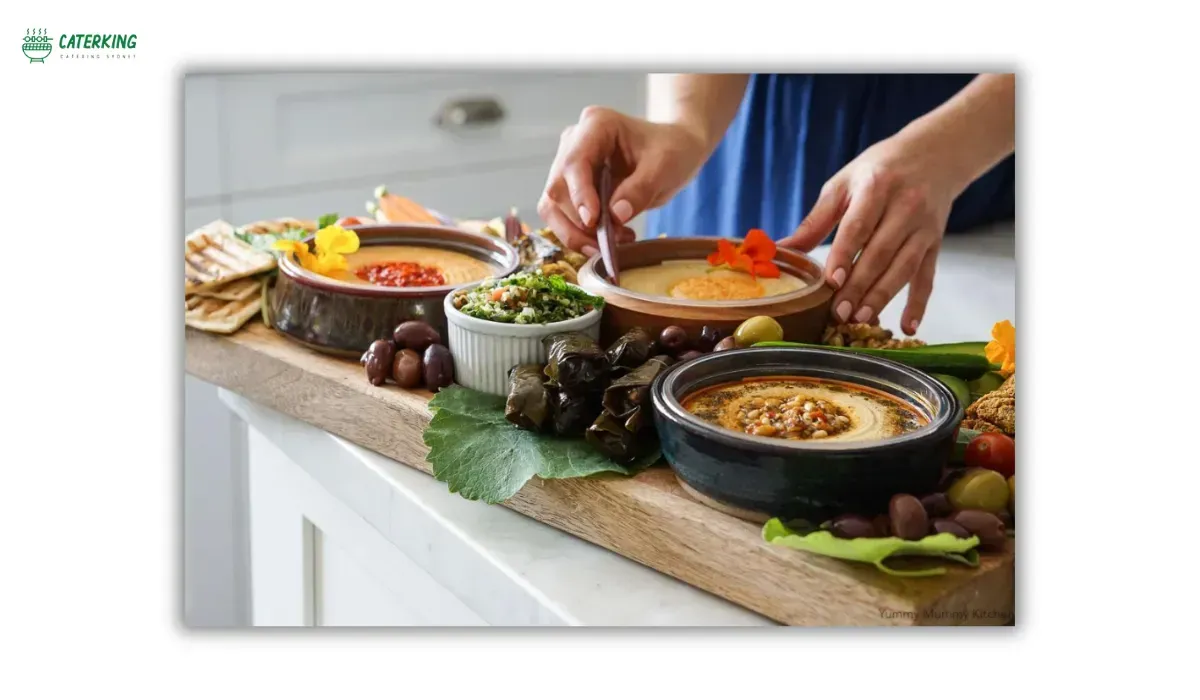
The Layering Method
Professional caterers build platters in three visual layers from back to front.
The back layer contains tallest items: small bowls of dips, bottles, and containers. Place hummus, tzatziki, and baba ganoush in small ceramic or wooden bowls. Position these toward the back of your serving board or in a cluster at one end.
The middle layer holds proteins and substantial items: grilled chicken pieces, kofta skewers, falafel clusters, and cheese blocks. Layer these between and around the dip bowls.
The front layer features breads, vegetables, and olives. Fan pita triangles along the front edge. Place small bowls of olives and arrange vegetable crudités in clusters. This layer should feel lighter and more colourful.
Colour Balance Tips
Mediterranean platters gain visual impact through strategic colour placement.
Browns and tans dominate naturally (pita, falafel, bread). Counter these with greens (cucumber, herbs, olives), reds (tomatoes, pomegranate, roasted peppers), whites (feta, cauliflower), and purples (eggplant, some olives).
Place colourful items where they contrast against neutral backgrounds. Red cherry tomatoes pop against white bowls. Yellow lemon slices add brightness beside darker elements. Fresh herbs scattered throughout connect colours without overwhelming.
Size and Proportion Guide
The platter itself should accommodate all components without crowding. Overcrowding remains the most common amateur mistake.
For 4-6 people, a board approximately 60-90cm long works well. For 8-12 people, plan 90-120cm. Scale up further with multiple boards rather than one overloaded centrepiece.
Maintain
2-3cm gaps between components for visual breathing room. Food touching food creates a cluttered, mass-produced appearance rather than an intentionally curated spread.
Mediterranean Platter for Every Occasion
One platter template adapts across occasions with simple adjustments to quantity and formality.
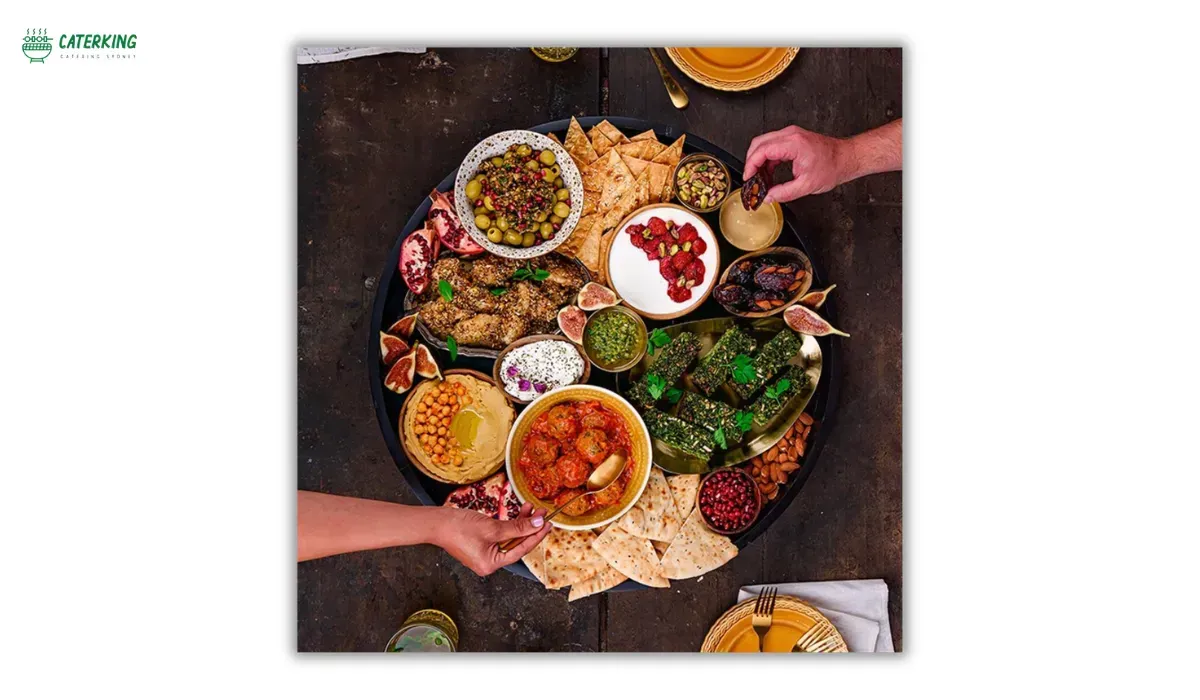
Casual Gathering (2-4 people)
A relaxed weeknight gathering requires fewer components but same quality principles. Limit to 3 dips, 1 protein option, 1 bread type, olives, and vegetables. Skip formal arrangement and serve family-style on a large plate or shallow bowl.
Cost approximately $35-45 for quality ingredients. Preparation time runs 30-40 minutes if using purchased components or 60-90 minutes including homemade dips.
Dinner Party (6-10 people)
A dinner party platter serves as the meal centrepiece rather than appetiser. Plan 4-5 dips, 2 protein options, 2 bread types, olives, vegetables, and 1-2 extras such as marinated feta or dukkah.
Cost approximately $80-120 for 8 people. Budget 2 hours for shopping and preparation. Most components benefit from overnight refrigeration.
Corporate Event
Corporate Mediterranean platters emphasise presentation and dietary accommodation. Label all items clearly for allergy awareness. Include gluten-free bread options (such as Rice crackers) alongside regular pita.
Professional catering typically costs $55-75 per head for corporate-quality spreads. Consider hiring service staff for events exceeding 30 guests.
Birthday and Celebration
Celebration platters deserve extra effort in presentation and premium ingredients. Include seasonal fruits, imported cheeses, and specialty items such as za'atar-roasted vegetables or saffron-infused components.
Mediterranean Platter Catering vs DIY: Which is Right for You?
Deciding between self-prepared and catered platters depends on four factors: time, budget, quality expectations, and guest count.
| Factor | DIY Platter | Catered Platter |
|---|---|---|
| Cost per person | $8-15 | $50-80 |
| Time required | 2-4 hours | 15 minutes ordering |
| Quality level | Varies by skill | Consistently professional |
| Best for | 2-10 guests | 10+ guests |
| Dietary flexibility | Maximum | Ask caterer |
For 4-6 people, DIY delivers better value and personal satisfaction. The time investment remains manageable, and quality control stays in your hands.
For 12+ guests, catering often proves more practical despite higher cost. Managing components for large groups requires significant kitchen space and preparation time.
Australian catering companies offer Mediterranean platter packages that include delivery, setup, and cleanup. Melbourne's Mediterranean Catering and Sydney's Levantine Catering Co receive consistently positive reviews for quality and reliability.
Mediterranean Platter FAQs
For those who prefer professional results without kitchen stress, explore finger food catering options that include premium Mediterranean selections for events of any size.
What is the difference between mezze and antipasto?
Mezze and antipasto share similar concepts but differ in origin. Mezze comes from Middle Eastern and Mediterranean traditions featuring multiple small dishes as the meal. Antipasto is Italian appetiser tradition, typically lighter and smaller in scope. Both encourage sharing and grazing dining.
How many people does a Mediterranean platter serve?
A well-designed Mediterranean platter serves 4-6 people as a light meal or 8-10 people as appetiser. Plan for 150-200g total food per person if platter constitutes the main meal. Scale quantities proportionally for larger groups.
What drinks pair well with mezze platters?
Mediterranean platters pair naturally with dry white wines such as Sauvignon Blanc or Vermentino. Rose wine suits summer gatherings. For non-alcoholic options, sparkling water with lemon or mint tea complement the bold flavours.
Can I make Mediterranean platter ahead of time?
Most platter components prepare 2-3 days ahead. Dips last 5 days refrigerated. Proteins store 3 days. Breads taste best prepared day-of. Assemble the platter itself no more than 2 hours before serving to maintain visual freshness.
How long does a mezze platter last?
A assembled platter remains fresh for 3-4 hours at room temperature. Keep dips covered and return to refrigeration between servings. Never leave at room temperature for more than two hours total.
What bread goes with Mediterranean platter?
Warm pita bread serves as the universal companion. Turkish flatbread, focaccia, and grilled Lebanese bread offer variations. For gluten-free options, provide rice crackers or corn chips alongside regular bread.
Is Mediterranean platter healthy?
Mediterranean platters rank among healthier entertaining options. Olive oil, vegetables, legumes, and lean proteins dominate traditional preparations. Dips such as hummus and tzatziki provide protein without excess fat. Limit high-calorie extras such as excessive feta cheese and deep-fried items for health-conscious events.
How much does catering for a Mediterranean platter cost in Australia?
Professional catering for Mediterranean platters costs
$50-80 per person depending on quality tier and inclusions. Basic
catering packages start around
$35 per head. Premium options with premium proteins and elaborate presentation reach
$100+ per head.
Let Catering Sydney elevate your catering experience - Get in touch with us now!
You might also like