Simple Breakfast Ideas for Meetings 2026 | Corporate Guide
Simple Breakfast Ideas for Meetings refers to optimized corporate breakfast solutions engineered around three core requirements: mess-free handling, individual portioning, and dietary inclusivity (Vegetarian/Gluten-Free/Keto). Primary menu options include Mini Bagels, Egg Muffin Cups, Yogurt Parfait Cups, and Fruit Skewers.
A well-fed meeting audience pays better attention. Research from Cornell University demonstrates that participants in meetings with food score 27% higher on engagement metrics than those in meetings without refreshments. Australian office culture has absorbed this lesson, with corporate breakfast meetings becoming standard practice for Board presentations, sales pitches, and team planning sessions.
This guide delivers 12+ breakfast ideas specifically suited for
corporate meetings, complete with budget planning, dietary accommodation strategies, and Sydney/Melbourne catering recommendations. Whether you coordinate a weekly team breakfast or a one-off executive presentation, you will find actionable solutions here.
Key Takeaways
- Food presence in meetings improves engagement scores by 27% according to workplace research
- Breakfast meeting food must be portable, minimally messy, and presentable
- Budget for corporate breakfast ranges from $12-50 per person depending on quality tier
- Sydney and Melbourne corporate catering services charge approximately $25-45 per head for breakfast packages
- Order catering at least 48 hours ahead for most providers, 1 week for large groups
- Dietary accommodations including vegetarian, vegan, and gluten-free require advance planning
- Breakfast meetings work best scheduled between 8:00-9:00am to maximise attendance
Why Breakfast Meetings Deserve Better Than Pastries from the Cafe
Office managers across Australia have inherited the "order some pastries" approach to meeting food. This solution fails consistently yet persists because alternatives feel unclear. The result: meetings where attendees eat dry croissants while pretending to pay attention to quarterly presentations.
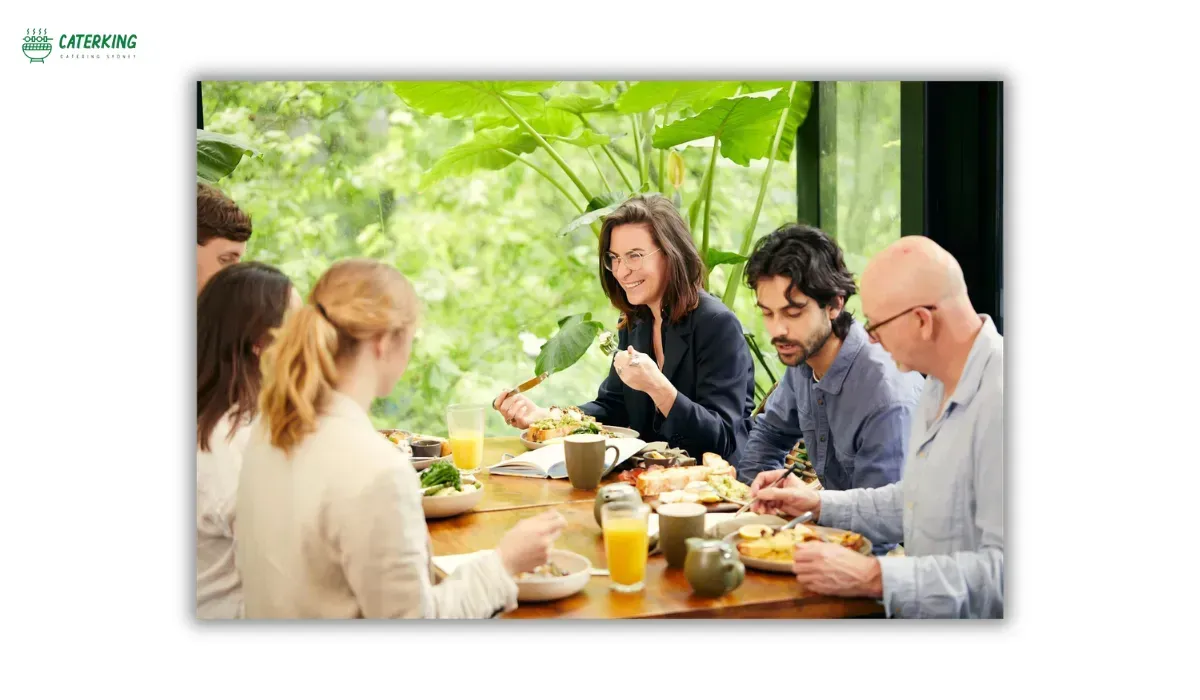
The pastry problem extends beyond quality. Croissants scatter flakes across keyboards and documents. Filled pastries create sticky fingers unsuitable for laptop work. Muffins crumble during note-taking. None of these foods support the professional image that your meeting deserves.
Australian corporate catering has evolved substantially over the past decade. Options now span everything from simple sandwich platters to elaborate hot breakfast buffets, with quality and price points to match every budget. Understanding what is available removes the friction that causes office managers to default to inadequate solutions.
The Psychology of Food in Meetings
Food triggers reciprocity instincts that work in your favour during meetings. Attendees who receive food unconsciously feel obligated to engage more positively with the presenter. This effect extends beyond hunger satisfaction: the act of receiving hospitality creates social obligation that enhances collaboration.
Breakfast specifically activates this effect during the time of day when willpower reserves run lowest. Hungry meeting participants struggle to concentrate. Satisfied attendees direct their full attention toward the meeting content. The cost of providing breakfast returns value through improved outcomes.
Hospitality also signals respect. Providing quality food tells attendees that their time matters enough to invest in their comfort. This message matters particularly in client meetings where competitive positioning occurs subtly through every touchpoint.
First Impressions Start With Breakfast
Clients form lasting impressions within seconds of entering a meeting room. The breakfast spread functions as a visible statement about your organisation's standards, attention to detail, and regard for attendees. A thoughtfully arranged breakfast communicates professionalism that supports your meeting objectives.
Conversely, a poorly chosen spread damages credibility before conversations begin. The contrast between your polished presentation deck and disposable coffee cups tells a story. Details accumulate into overall impressions, making every element worthy of considered selection.
12+ Simple Breakfast Ideas for Corporate Meetings
The following ideas span budget levels and complexity. Select combinations that match your group size, dietary requirements, and presentation standards.
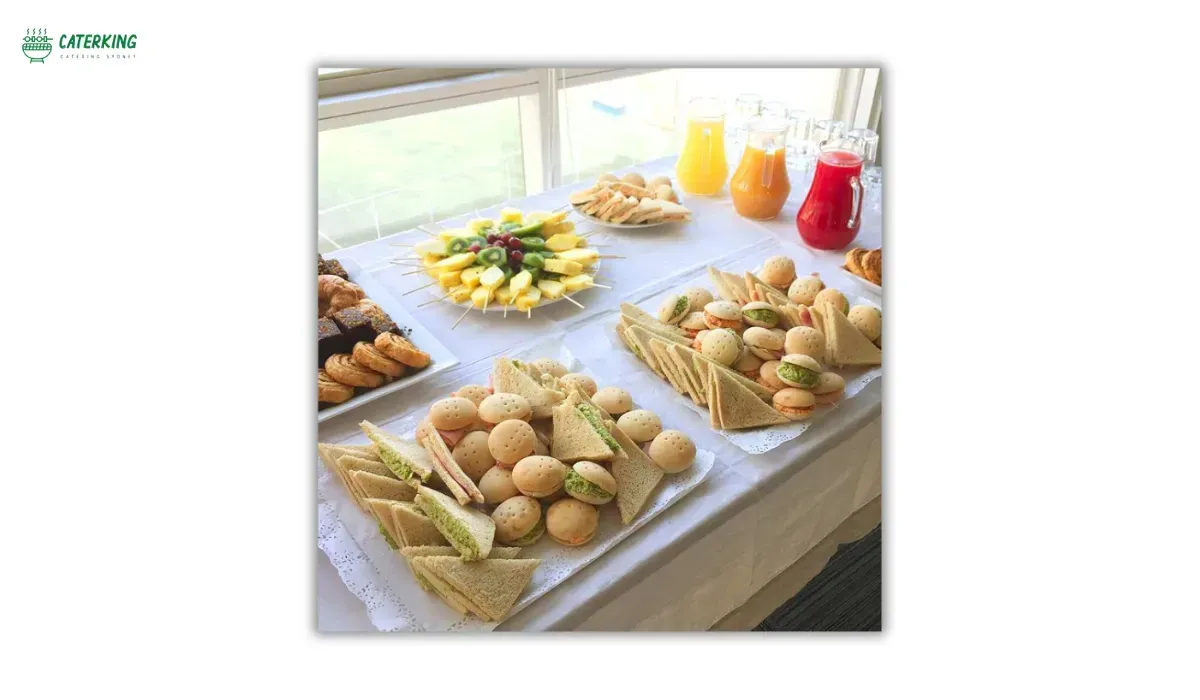
Savory Options
Mini breakfast sandwiches suit almost any meeting format. Use small rolls or slider buns with fillings such as:
- Bacon, egg, and BBQ sauce
- Poached chicken with lettuce and mayonnaise
- Smoked salmon with cream cheese and capers
- Roasted vegetables with hummus
Sydney catering services produce these in quantities from 10 to 500+ with custom branding available for client presentations.
Frittata squares provide protein-rich options that hold their shape at room temperature. Cut frittata into bite-sized squares and serve on platters with toothpicks. Variations include:
- Spinach and feta
- Pumpkin and sage
- Bacon and caramelised onion
- Roasted capsicum and goats cheese
Frittata travels well and maintains quality for several hours, making it suitable for early morning meetings where food sits before service.
Sausage rolls remain Australian office catering classics for good reason. These handheld items satisfy hungry attendees without requiring utensils or plates. Quality varies dramatically between producers. Seek bakeries or caterers who make sausage rolls fresh rather than freezing and reheating.
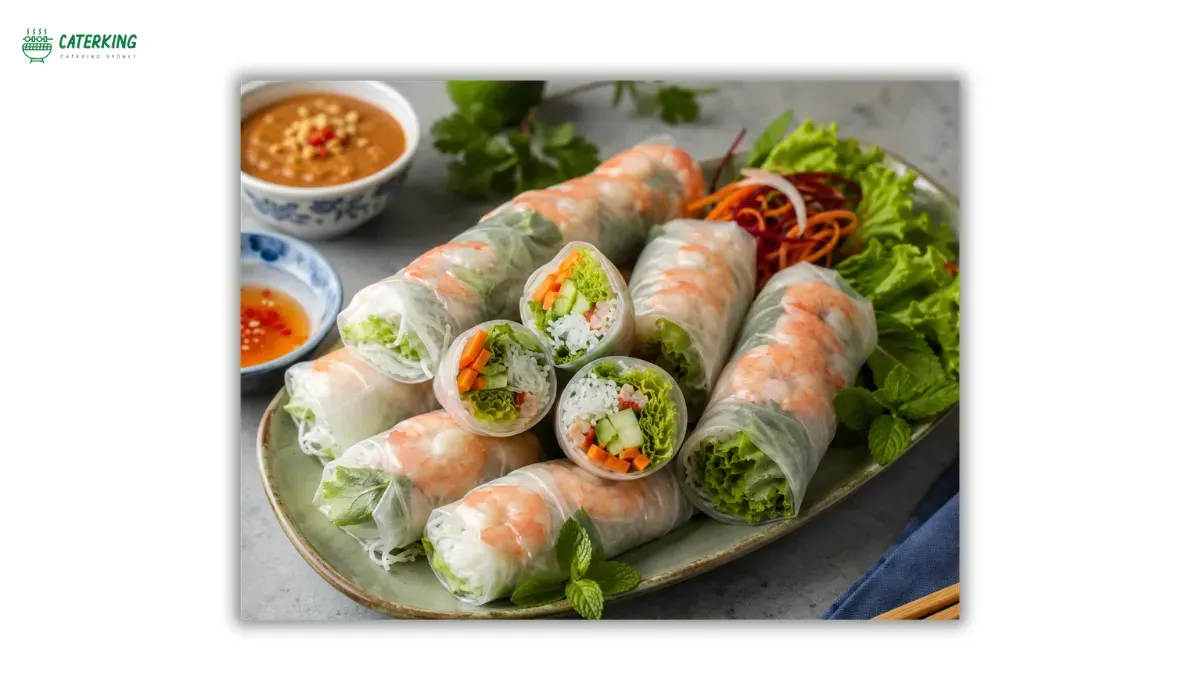
Spring rolls and rice paper rolls offer lighter alternatives that appeal to health-conscious attendees. Vegetable spring rolls with sweet chilli sauce work universally. Chicken or prawn versions add protein for those wanting more substance.
Cheese and antipasto platters require no cooking and adapt easily to dietary requirements. Select 3-4 cheeses including one hard, one soft, and one blue. Add cured meats, olives, and crackers. This format naturally accommodates vegetarian attendees when meats are separated.
Sweet Options
Fresh fruit cups solve the fruit problem elegantly. Pre-portioned cups containing seasonal fruit prevent the awkward whole fruit situation where attendees struggle to eat apples while taking notes. Add a small fork or toothpick for convenience.
Greek yoghurt parfaits in clear cups demonstrate quality and attention to dietary requirements. Layer yoghurt with granola and berries in small cups. This option provides protein and satisfies sugar cravings without excessive indulgence.
Banana bread slices work well as sweet addition to savory-focused spreads. Source from bakeries rather than attempting homemade; quality banana bread requires skill and produces superior results. Wrap individual slices for easy serving.
Assorted Danish pastries and croissants warrant inclusion despite earlier criticism when selected appropriately. Plain croissants without heavy filling produce fewer crumbs. Chocolate croissants and Danish offer sweetness without drip risk. Limit these to 1-2 pieces per person alongside more practical options.
Bircher muesli cups provide healthy options that impress health-conscious attendees. Soak oats overnight in apple juice, serve with yoghurt, honey, and fruit. These require advance preparation but deliver sophisticated results.
Beverage Considerations
Breakfast meetings require beverage service beyond coffee. Water must appear at every seat regardless of other offerings.
Sparkling water with lemon adds sophistication without cost. Pre-slice lemons and add to jugs of sparkling water for effortless presentation.
Fresh orange juice in carafes or dispensers provides a breakfast centrepiece. Avoid juice boxes or small individual servings that create waste. A juice dispenser looks intentional while reducing packaging.
Coffee service requires attention to quality and quantity. Australian office workers consume coffee as ritual as much as necessity. Underestimating coffee needs embarrasses hosts. Plan for 1.5-2 cups per attendee and provide both regular and decaf options.
Breakfast Meeting on a Budget: Cost Per Person Guide
Budget constraints influence food quality achievable. Knowing what different price points deliver helps match expectations to expenditure.
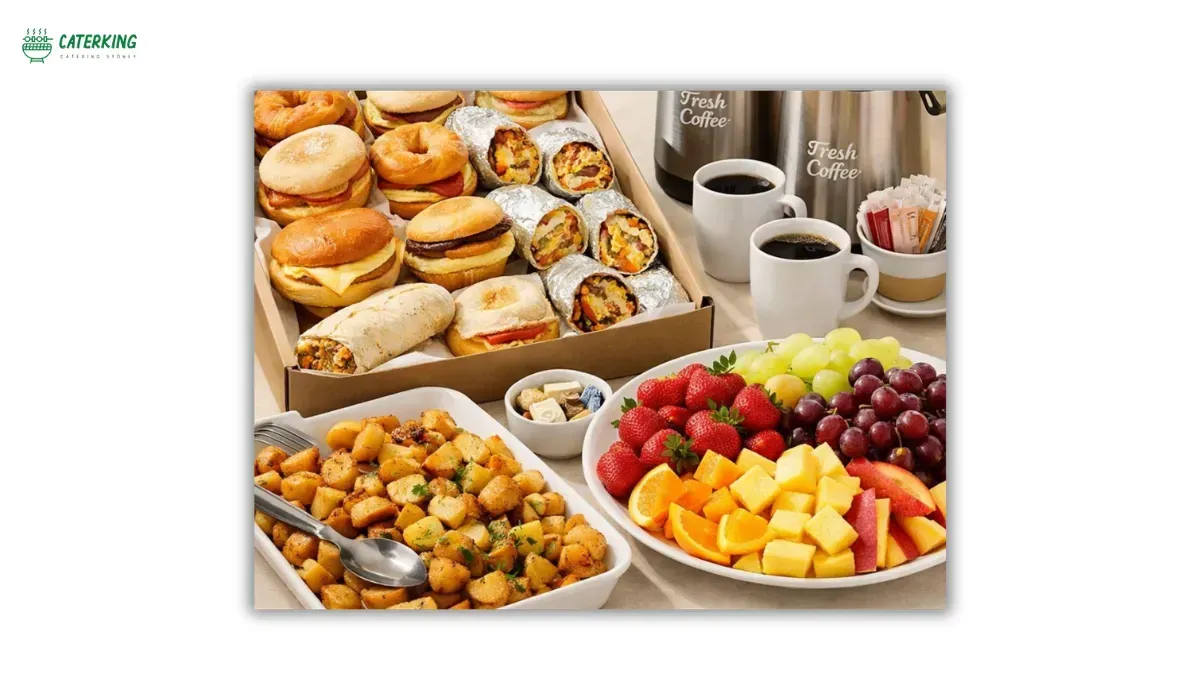
Under $15 Per Person
This budget delivers adequate basic breakfast for cost-conscious organisations. Options include:
- Assorted pastries (2 pieces per person) from bakeries
- Fruit cups with individual yoghurts
- Coffee and juice service
- Basic sandwich platter
Results appear functional rather than impressive. This budget suits internal team meetings where food enhancement matters but presentation matters less.
$15-25 Per Person
This range represents the sweet spot for most corporate breakfast meetings. Achieievable offerings include:
- Premium pastry selection including Danish and croissants
- Frittata or mini quiche selection
- Cheese and antipasto board
- Fresh fruit platters
- Quality coffee service with barista-style options
This budget impresses clients and motivates staff without significant expenditure. Many Sydney and Melbourne caterers design packages specifically in this range.
$25-50 Per Person
Premium catering delivers exceptional results for important presentations or executive meetings. Options include:
- Hot breakfast elements such as bacon and eggs
- Custom menu items with branding
- Full service with staffing
- Multiple cuisine options
- Dietary-specific premium selections (organic, locally sourced)
This budget matches the investment when the meeting outcome justifies it. Board presentations, major client pitches, and investor meetings warrant this level.
Dietary Requirements: Feeding Everyone Equally
Australian workplaces require attention to dietary diversity that past catering approaches overlooked. Failing to accommodate creates exclusion that damages team culture.
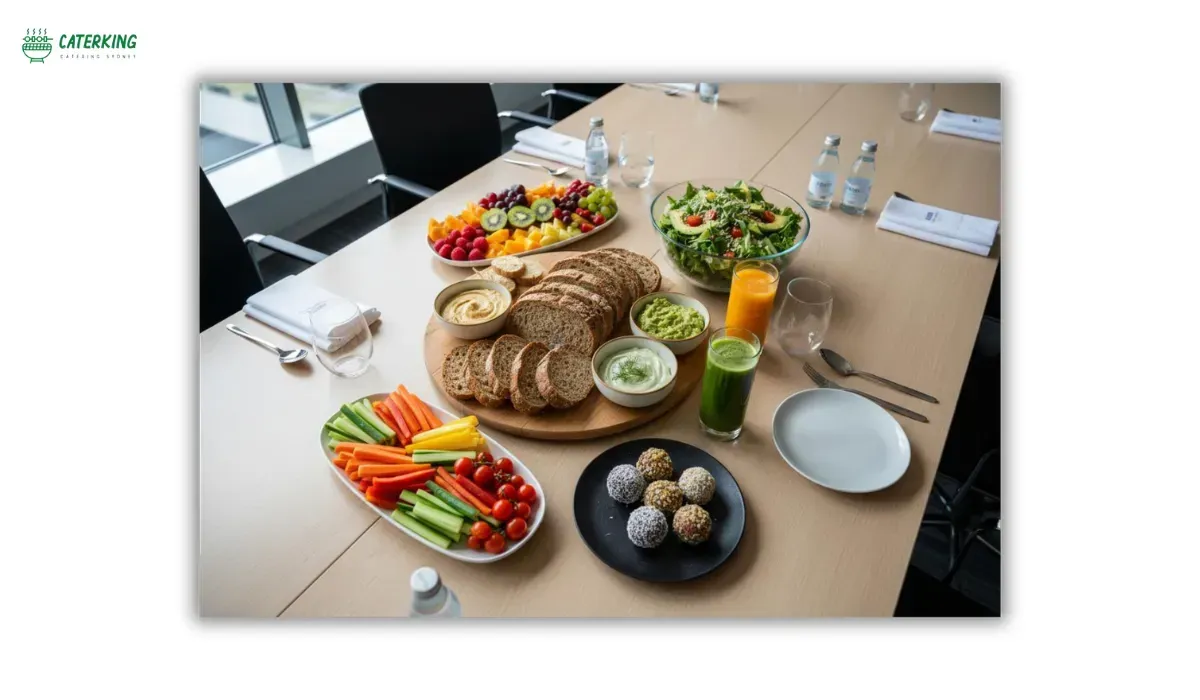
Vegetarian and Vegan Options
Plan vegetarian options as standard rather than afterthought. At least one savoury option should be vegetarian without meat present. Vegan options require avoidance of all animal products including dairy, eggs, and honey.
Effective vegetarian meeting options include:
- Vegetable spring rolls with sweet chilli sauce
- Cheese and antipasto platters
- Frittata squares (ensure no meat included)
- Fruit cups and yoghurt parfaits (ensure dairy-free yoghurt available)
Label vegan items clearly. Many vegetarians eat dairy while vegans do not, requiring separate identification.
Gluten-Free Considerations
Gluten-free attendees feel perpetually underserved in Australian catering environments. Provide genuinely gluten-free options rather than assuming.
Safe gluten-free breakfast options:
- Frittata squares (ensure no flour in mixture)
- Fresh fruit cups
- Rice paper rolls
- Cheese and cold meat platters (verify no additives containing gluten)
Avoid cross-contamination by keeping gluten-free items separate from bread and pastry items. Utensils used for regular items should not serve gluten-free selections.
Religious and Cultural Requirements
Sydney and Melbourne offices increasingly include team members with Islamic, Hindu, and Jewish dietary requirements. Advance enquiry about attendee requirements prevents uncomfortable situations.
Halal requirements mean certified halal meat for any meat items. Several Australian catering services offer halal-certified breakfast packages.
Hindu team members may avoid beef. Pork exclusion affects Islamic and Jewish attendees and some Christian observers. Removing these proteins from at least one option accommodates most religious requirements.
Kosher requirements vary significantly and require specific certification. When accommodating strictly kosher attendees, professional kosher catering is necessary rather than attempting DIY solutions.
Setting Up Your Meeting Breakfast Station
Food quality matters less than setup quality. A beautifully arranged breakfast station creates impression that supports your meeting objectives.
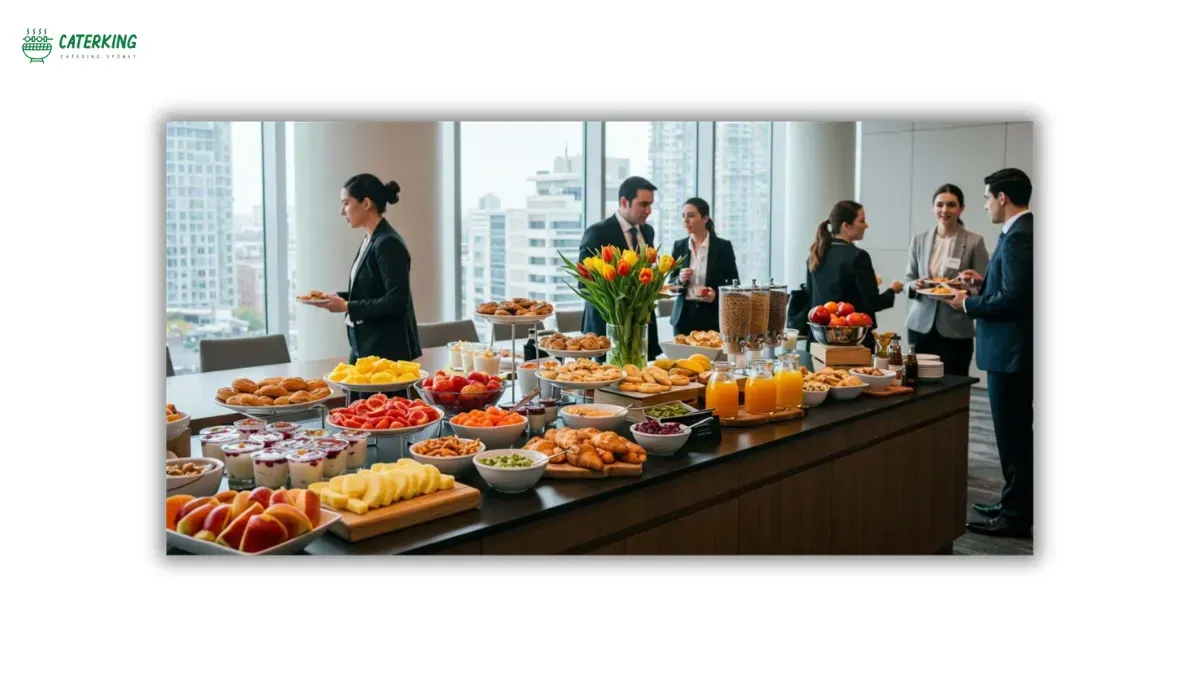
Location selection matters. Place breakfast in the meeting room rather than a separate area. Attendees should access food without leaving the meeting space. This arrangement encourages grazing during networking and breaks.
Buffet flow requires consideration. If serving from a single point, congestion occurs. For groups exceeding 20 people, consider two service points or staggered arrival grazing. Lengthwise table arrangements work better than clustered circular setups.
Equipment checklist:
- Plates and napkins
- Small forks and toothpicks
- Serving utensils (if not pre-portioned)
- Water glasses
- Coffee cups and stirring sticks
- Tissue paper or paper towels for cleanup
- Name placards for dietary options
Timing of food arrival matters. Breakfast should be ready when attendees enter. Working from a checklist prevents forgotten items. Schedule delivery for 15-20 minutes before meeting start to allow final setup.
Simple Breakfast Meeting FAQs
For Sydney and Melbourne corporate breakfast catering that removes logistical burden, explore corporate catering services that include breakfast packages with dietary accommodations, professional setup, and quality delivery matched to your meeting requirements.
What food is best for a breakfast meeting?
The best breakfast meeting food requires no utensils, produces minimal mess, and holds its shape during eating. Mini sandwiches, frittata squares, fruit cups, and quality pastries work universally. Avoid anything requiring knives, producing crumbs, or creating sticky hands that interfere with laptop use.
How much food do I need for a breakfast meeting of 15 people?
Plan approximately 150-200g solid food per person for a breakfast meeting lasting 1-2 hours. This translates to 3-4 savoury items and 2 sweet items per person. For a group of 15, prepare quantities serving 18-20 to account for varied appetites and unexpected additions.
What is a good budget for corporate breakfast catering?
Professional corporate breakfast catering costs between $25-50 per person in Sydney and Melbourne. Internal team meetings suit the lower end of this range while client presentations warrant premium packages. DIY breakfast from bakeries and supermarkets costs $10-15 per person but requires significant staff time.
How early should I order breakfast catering?
Order catering at least 48 hours ahead for most providers. Large groups exceeding 30 people require 1 week notice. Premium caterers with custom menus or branded items need 2-3 weeks lead time. Confirm delivery timing with your provider to ensure food arrives appropriately before the meeting starts.
What breakfast foods can be made the night before?
Several breakfast items are prepared successfully in advance. Frittata and quiche are kept refrigerated for 2 days and served at room temperature. Fruit cups and yoghurt parfaits assemble the night before and refrigerate. Most pastry items from bakeries arrive day-old and maintain quality. Avoid items containing avocado or apple that brown with overnight storage.
How to accommodate dietary requirements in corporate catering?
Specify dietary needs clearly when ordering. Request that caterers label each item. Prepare at least one option for each major dietary category: vegetarian, vegan, and gluten-free. Never assume that vegetarian items suit vegan attendees or that removing meat from a dish makes it gluten-free. When in doubt, add more clearly labelled options rather than combining requirements.
What drinks should I serve at a breakfast meeting?
Every breakfast meeting requires water, coffee, and at least one alternative. Sparkling water with citrus provides a refreshing non-alcoholic option. Fresh orange juice suits most breakfast menus. Coffee should include both regular and decaf options. Avoid providing only tea or only coffee; attendee preferences vary significantly.
How to set up a breakfast station for 20 people?
Arrange food on a table or bench near the meeting room entrance. Place plates and napkins at the start of the service line. Arrange savoury items first, then sweet options, then beverages. Label each item clearly. Place dietary accommodation items separately with visible signage. Set up garbage and recycling bins near the exit for easy cleanup.
Let Catering Sydney elevate your catering experience - Get in touch with us now!
You might also like