Pizza Catering Weddings: Complete Planning Checklist
Pizza catering weddings deliver authentic wood-fired dining experiences for receptions ranging from intimate 50-guest gatherings to celebrations exceeding 300 attendees. Mobile pizza catering combines artisan food preparation with interactive guest engagement, typically costing $18-$35 per person depending on menu complexity, service duration, and equipment requirements. Professional pizza caterers operate mobile wood-fired ovens that produce 80-120 pizzas per hour, ensuring consistent quality throughout multi-hour reception timelines while accommodating dietary restrictions through gluten-free bases, vegan cheese alternatives, and allergen-conscious topping selections.
The checklist approach to planning pizza catering weddings addresses six critical decision points: guest capacity calculations, menu variety specifications, service timeline coordination, venue infrastructure assessment, dietary accommodation strategies, and cost projection accuracy. Each element directly influences the operational success of wood-fired catering execution.
What Makes Pizza Catering Suitable for Wedding Receptions?
Pizza catering weddings function as scalable dining solutions that address three primary reception challenges: variable guest attendance patterns, diverse dietary requirements, and budget consciousness among couples allocating $8,000-$15,000 to total catering expenditure. This wedding catering approach provides flexibility that traditional plated service cannot match.
Operational advantages of pizza catering models:
- Production velocity - Wood-fired ovens maintain 400-500°C temperatures, cooking individual pizzas in 90-120 seconds, which supports continuous service flow during peak reception periods.
- Menu customisation flexibility - Base dough recipes accommodate gluten-free flour alternatives, while topping selections span vegetarian, vegan, pescatarian, and meat-inclusive options without requiring separate kitchen facilities.
- Interactive guest experience - Visible cooking stations create entertainment value as pizzaiolos demonstrate traditional dough-tossing techniques and manage live-fire cooking processes.
- Cost predictability - Fixed per-person pricing models ($18-$35 range) include equipment transport, staff labour, ingredient procurement, and service coordination, eliminating hidden fee structures common in traditional plated catering.
Mobile pizza catering particularly suits outdoor wedding catering scenarios including vineyard settings, beachfront locations, and rustic barn spaces where wood-fired ovens complement aesthetic themes without requiring permanent kitchen infrastructure. The service model scales effectively from 50-person elopement receptions to 300+ guest celebrations through proportional staffing adjustments and additional oven deployment.
How Many Pizzas Should Wedding Caterers Prepare Per Guest?
Guest consumption patterns for pizza catering weddings follow established calculation formulas that account for meal timing, accompanying dishes, and demographic composition. Understanding these calculations ensures adequate food provision without excessive waste or shortage scenarios.
The standard allocation recommends 3-4 pizza slices per adult guest when pizza functions as the primary meal component, translating to one 12-inch pizza serving 3-4 people.
Pizza Quantity Calculation Checklist
Accurate quantity planning prevents both food shortage and excessive waste scenarios that impact budget efficiency and guest satisfaction.
For 50 guests:
- Pizza count - 13-17 pizzas (12-inch diameter)
- Service duration - 2-3 hours continuous production
- Buffer quantity - Additional 2-3 pizzas for late arrivals or high-consumption scenarios
- Staff allocation - 2 service personnel minimum
- Oven capacity - Single wood-fired oven is sufficient
For 100 guests:
- Pizza count - 25-34 pizzas
- Service duration - 3-4 hours continuous service
- Buffer quantity - Additional 4-6 pizzas
- Staff allocation - 3-4 service personnel
- Oven capacity - Single oven with experienced team, or dual setup for comfort
For 150 guests:
- Pizza count - 38-50 pizzas
- Service duration - 4-5 hours service with staggered cooking batches
- Buffer quantity - Additional 6-8 pizzas
- Staff allocation - 4-5 service personnel
- Oven capacity - Dual oven deployment recommended
For 200+ guests:
- Pizza count - 50-67 pizzas minimum
- Service duration - 4-5 hours continuous production
- Buffer quantity - 10-12 additional pizzas
- Staff allocation - 5-6 service personnel
- Oven capacity - Dual oven setup mandatory for service quality
Consumption variables that influence final quantities include reception start time (lunch receptions generate 15-20% higher pizza consumption than evening events following cocktail hour), average guest age (younger demographics aged 18-35 consume 0.5-1 additional slices compared to 50+ age groups), and beverage alcohol content (beer and wine service increases pizza consumption by 10-15% over non-alcoholic-only receptions).
Adjusting for Additional Food Stations
Professional caterers adjust baseline calculations when pizza catering operates alongside additional food stations. Antipasto platters, salad bars, or dessert buffets reduce per-person pizza allocation to 2-3 slices, while pizza-exclusive menus require the full 3-4 slice projection to prevent shortage scenarios.
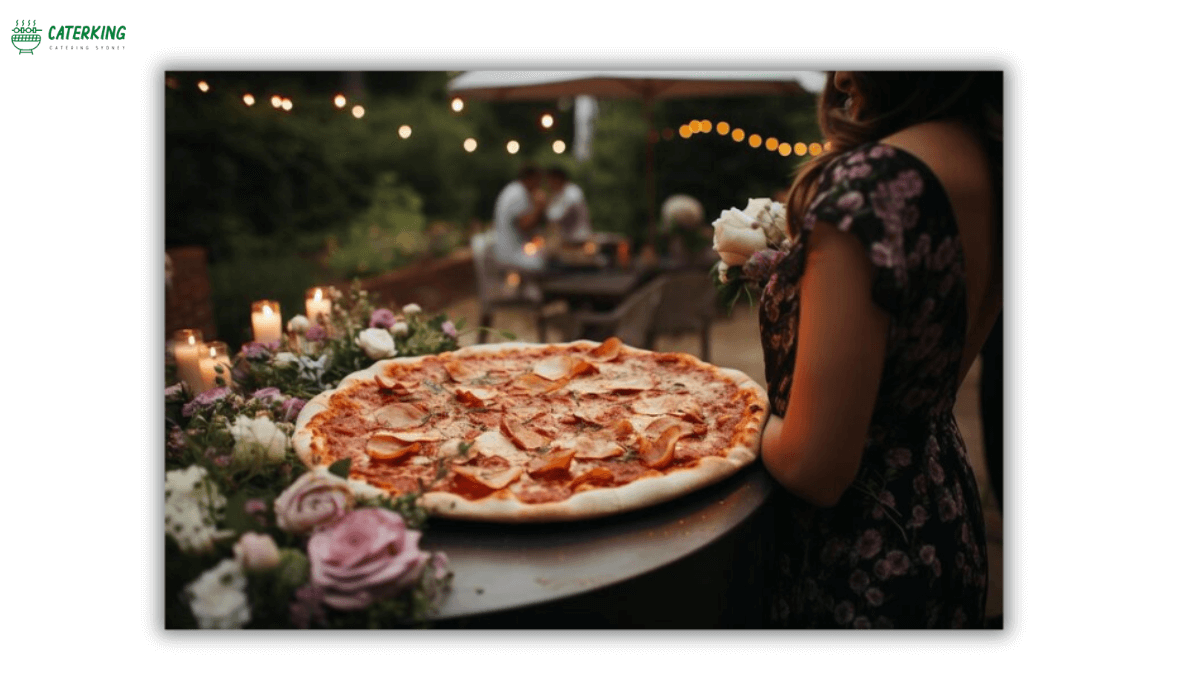
What Pizza Varieties Should Wedding Menus Include?
Menu diversity planning for pizza catering weddings balances traditional favourites against specialty options that accommodate dietary restrictions and flavour preferences. The pizza selection directly impacts guest satisfaction and reflects the couple's attention to inclusive dining experiences.
The optimal wedding pizza menu includes 5-7 varieties distributed across vegetarian, meat, seafood, and vegan categories.
Essential Pizza Variety Checklist
Strategic variety selection ensures broad appeal while managing operational complexity and ingredient costs.
Traditional base selections (60% of total quantity):
- Margherita - San Marzano tomato base, mozzarella fior di latte, fresh basil, extra virgin olive oil (universal appeal foundation)
- Pepperoni - Tomato sauce, mozzarella, premium pepperoni, oregano (highest consumption rate among meat options)
- Vegetarian - Seasonal vegetables (roasted capsicum, zucchini, mushroom, red onion), mozzarella, tomato base (accommodates vegetarian guests without specialty preparation)
Gourmet specialty options (30% of total quantity):
- Prosciutto e rucola - Mozzarella base, prosciutto crudo, rocket leaves, parmesan shavings, balsamic glaze (elegant flavour profile for sophisticated palates)
- Quattro formaggi - Four cheese blend (mozzarella, gorgonzola, fontina, parmesan), white sauce base (rich option for cheese enthusiasts)
- Marinara - Tomato, garlic, oregano, olive oil (vegan-friendly base option, doubles as dietary accommodation)
Dietary accommodation selections (10% of total quantity):
- Gluten-free bases - Available for all topping combinations with cross-contamination prevention protocols
- Vegan options - Plant-based cheese alternatives, vegetable-focused toppings prepared without animal products
- Dairy-free selections - Marinara-style or olive oil-herb bases without cheese, enhanced with premium vegetable toppings
Regional Australian preferences influence menu curation. Sydney and Melbourne wedding demographics favour gourmet combinations incorporating local ingredients (Queensland prawns, Tasmanian smoked salmon, Adelaide Hills goat cheese), while Brisbane and Perth markets demonstrate stronger preference for traditional Margherita and pepperoni varieties comprising 70% of total orders.
Topping Substitution Policies
Caterers should confirm topping substitution policies during contract negotiations, ensuring last-minute dietary disclosures (nut allergies, nightshade sensitivities, specific religious requirements) receive appropriate accommodation without additional fees or extended preparation timelines.
When Should Pizza Service Begin During Reception Timelines?
Pizza catering timing coordination determines guest satisfaction levels and operational flow efficiency. Proper timing prevents excessive pre-meal alcohol consumption while ensuring food maintains optimal temperature and texture quality.
The service commencement decision depends on reception structure, ceremony-to-reception transition duration, and complementary food offerings.
Pizza Service Timing Checklist
Strategic service timing aligns food availability with natural guest hunger patterns and reception flow dynamics.
Ceremony-to-reception gap: Under 1 hour
- Service commencement - Deploy pizza service 20-30 minutes after guest arrival
- Reception alignment - Coincide with cocktail hour conclusion
- Guest management benefit - Prevents excessive pre-meal alcohol consumption
- Quality maintenance - Maintains food temperature consistency through immediate service
- Staff preparation - Wood-fired ovens reach optimal temperature (400-500°C) during ceremony
Ceremony-to-reception gap: 1-2 hours
- Service commencement - Provide light appetisers during initial cocktail period, commence pizza service 60-75 minutes post-ceremony
- Reception alignment - Aligns with natural guest hunger patterns
- Guest management benefit - Reduces wait-time complaints and maintains positive reception atmosphere
- Quality maintenance - Fresh pizzas emerge during peak hunger window
- Staff preparation - Dual food station coordination (appetisers transitioning to main service)
Ceremony-to-reception gap: 2+ hours
- Service commencement - Implement substantial canapé service during extended cocktail hour, begin pizza service as formal reception meal
- Reception alignment - Coordinate with MC announcements for seating transitions
- Guest management benefit - Prevents hunger-related guest dissatisfaction
- Quality maintenance - Ensure wood-fired ovens reach optimal temperature 45 minutes before service
- Staff preparation - Extended prep time allows menu customisation for dietary requests
Evening receptions commencing after 6:00 PM require earlier pizza service deployment compared to afternoon celebrations. Guest expectations for dinner timing typically concentrate within 7:00-8:30 PM windows, creating operational pressure for caterers managing 150+ guest counts with single-oven configurations.
Continuous Service vs Single-Batch Production
Continuous service models prove more effective than single-batch approaches. Rather than preparing all pizzas simultaneously, professional caterers maintain rolling production schedules where fresh pizzas emerge from ovens every 2-3 minutes, ensuring optimal temperature and texture quality throughout 2-4 hour service periods.

What Venue Requirements Support Pizza Catering Operations?
Venue infrastructure assessment directly influences pizza catering feasibility and operational complexity. Thorough venue evaluation prevents service day complications and ensures health regulation compliance. Mobile wood-fired ovens require specific spatial allocations, utility access, and safety clearances that vary across wedding location types.
Venue Infrastructure Checklist
Comprehensive infrastructure assessment ensures operational success and regulatory compliance for pizza catering execution.
Space allocation requirements:
- Cooking station footprint - 4m x 4m minimum for single oven setup, 6m x 5m for dual ovens (includes oven positioning, staff movement zones, ingredient storage)
- Guest circulation zones - 2-3 metre clearance around cooking stations for viewing access and queue management without congestion
- Preparation areas - 2m x 1.5m benchtop space for dough preparation, topping assembly, and plated service coordination
- Waste management - Designated zones for rubbish bins, recycling, and compost disposal (minimum 1.5m x 1m area)
- Equipment storage - Secure area for backup ingredients, additional cookware, and staff belongings
Utility and access specifications:
- Electrical supply - 15-amp power outlet for lighting, refrigeration units, and auxiliary equipment (not required for wood-fired oven operation but essential for food safety)
- Water access - Handwashing stations located within 10 metres of cooking area (health regulation requirement across all Australian states)
- Vehicle access - Minimum 3-metre-wide pathways for oven trailer delivery and positioning, including turning radius considerations
- Surface stability - Level, firm ground capable of supporting 800-1200kg equipment weight without sinking or shifting
- Loading/unloading zones - Designated area within 20 metres of cooking station for efficient setup and pack-down
Safety and regulatory compliance:
- Fire clearance zones - 3-metre radius clearance from oven chimney to overhead structures (pergolas, marquee roofing, tree canopies) to prevent fire hazards
- Smoke ventilation - Outdoor settings or well-ventilated covered areas; indoor venues require commercial extraction systems meeting AS 1668.2 standards
- Food safety certifications - Caterers must hold current food handling licenses and public liability insurance ($10-20 million coverage standard)
- Emergency access - Clear pathways for emergency vehicle access maintained throughout service duration
- First aid provisions - On-site first aid kit and trained personnel for potential burn injuries or food-related incidents
Indoor ballroom venues, hotel function spaces, and enclosed pavilions present operational challenges for wood-fired pizza catering due to smoke ventilation requirements and fire safety regulations. These locations typically necessitate alternative cooking methods (electric pizza ovens, pre-cooked delivery models) that compromise the authentic wood-fired experience but maintain menu variety and service efficiency.
Optimal Venue Types for Pizza Catering
Outdoor wedding venues, garden settings, vineyard estates, and beachfront locations provide optimal conditions for mobile pizza catering operations, offering natural ventilation, flexible spatial arrangements, and aesthetic alignment with rustic, Mediterranean, or casual reception themes.
How Much Does Pizza Catering Cost for Wedding Receptions?
Pizza catering weddings generate cost structures spanning $18-$35 per person, influenced by menu complexity, service duration, guest capacity, location logistics, and additional service elements. Understanding comprehensive pricing structures enables accurate budget allocation and prevents unexpected expenses. Budget-conscious couples allocate $2,700-$7,000 for complete pizza catering packages serving 150-200 guests, positioning pizza catering as an affordable alternative to traditional plated service.
For broader wedding catering cost comparisons, couples should evaluate pizza catering against other popular options.
Cost Breakdown Checklist by Guest Capacity
Detailed cost projections across guest capacity tiers enable accurate budget planning and vendor comparison.
50-75 guests:
- Base catering cost - $1,350-$2,625 ($18-$35 per person based on menu complexity)
- Service inclusions - Single wood-fired oven, 2 staff members, 3-hour service, 5 pizza varieties
- Additional costs - Venue delivery fee $150-$300 (distance-dependent), equipment setup $0-$150
- Total investment range - $1,500-$3,075
- Per-person final cost - $20-$41 all-inclusive
100-150 guests:
- Base catering cost - $2,700-$5,250
- Service inclusions - Single or dual ovens (capacity-dependent), 3-4 staff, 4-hour service, 6-7 pizza varieties
- Additional costs - Beverage packages $8-$15 per person, antipasto platters $12-$18 per person
- Total investment range - $2,700-$7,950
- Per-person final cost - $27-$53 all-inclusive
200-300 guests:
- Base catering cost - $5,400-$10,500
- Service inclusions - Dual oven setup mandatory, 5-6 staff members, 4-5 hour service, full menu range
- Additional costs - Additional serving stations $500-$800, extended service hours $150-$250 per hour
- Total investment range - $5,900-$12,800
- Per-person final cost - $29.50-$42.67 all-inclusive
Premium pricing factors that elevate per-person costs include gourmet ingredient selections (prosciutto di Parma, truffle oil, buffalo mozzarella), specialty dietary accommodations exceeding 20% of guest count, remote venue locations requiring extended travel (50km+ from catering base), and weekend service dates during peak wedding season (September-May in Australian markets).
Cost Optimisation Strategies
Cost optimisation strategies include mid-week wedding dates (Tuesday-Thursday bookings receive 10-15% discounts from premium caterers), off-peak season scheduling (June-August availability in southern states), and simplified menu selections focusing on 4-5 varieties rather than extensive 8-10 option ranges that increase ingredient procurement complexity and waste potential. Comparing buffet vs plated catering options further clarifies budget allocation decisions.
What Dietary Accommodations Should Pizza Catering Include?
Dietary restriction management represents a critical planning component for pizza catering weddings, with 30-40% of contemporary wedding guest lists declaring specific dietary requirements ranging from allergies to lifestyle preferences. Professional wedding catering for diets demands requires comprehensive accommodation strategies that maintain service quality while ensuring guest safety.
Effective dietary accommodation prevents guest exclusion and demonstrates the couple's commitment to inclusive hospitality.
Dietary Accommodation Checklist
Comprehensive dietary planning ensures all guests receive safe, enjoyable meal options without compromising service efficiency.
Gluten-free requirements (15-20% of guests):
- Preparation protocols - Certified gluten-free pizza bases prepared in dedicated stations to prevent cross-contamination
- Equipment separation - Separate cutting boards, pizza cutters, and serving utensils stored away from gluten-containing preparation zones
- Identification systems - Clear labeling systems for gluten-free pizzas throughout service using colour-coded plates or flags
- Cost premium - $2-$4 per gluten-free base to offset specialty flour costs
- Certification verification - Caterers should provide gluten-free certification documentation for severe celiac accommodation
Vegan requirements (8-12% of guests):
- Cheese alternatives - Plant-based cheese alternatives (cashew-based, coconut-derived options) with melt characteristics matching dairy cheese
- Topping combinations - Vegetable-focused topping combinations without animal products (roasted vegetables, olives, capers, artichokes)
- Dough verification - Vegan-certified dough recipes (some traditional recipes contain milk or butter as dough conditioners)
- Flavour enhancement - Oil-based flavour enhancements replacing dairy elements (herb-infused olive oil, garlic confit)
- Cross-contamination prevention - Dedicated vegan preparation zone with separate utensils
Dairy-free requirements (5-8% of guests):
- Marinara-style pizzas - Tomato, garlic, herb, and olive oil combinations without cheese
- Dairy-free cheese substitutes - Where texture expectations require cheese presence (almond-based, soy-based alternatives)
- Dough composition clarity - Clear communication about incidental dairy in dough recipes (butter washes, milk powder additions)
- Flavour compensation - Enhanced seasoning and premium toppings to offset absence of cheese richness
Allergy management protocols:
- Nut allergies - Pesto sauce alternatives (basil-garlic-olive oil without pine nuts), almond-free vegan cheese options, contamination prevention through dedicated preparation zones
- Shellfish allergies - Dedicated preparation zones when seafood pizzas appear on menus, separate cutting implements, clear guest communication
- Egg allergies - Egg-free dough alternatives (most pizza dough recipes exclude eggs, but verification required for egg-wash finishes)
- Nightshade sensitivities - Alternative base sauces (pumpkin purée, white sauce, olive oil) for guests avoiding tomatoes and capsicum
Professional caterers require dietary declaration submissions 14-21 days before wedding dates to ensure appropriate ingredient procurement, staff training on cross-contamination prevention, and menu adjustment implementation. Last-minute dietary disclosures (within 7 days of event) may incur rush procurement fees ($50-$150) or result in limited accommodation options.
Guest Communication Strategies
Guest communication strategies include dietary requirement collection through RSVP processes, reception table signage identifying pizza varieties and ingredients, and dedicated service staff members who address dietary questions during active service periods.
FAQs
Pizza catering weddings generate consistent questions from couples navigating menu decisions, logistics coordination, and budget allocation. Understanding these common concerns streamlines planning processes and prevents service day complications.
The following addresses frequent planning questions specific to Australian wedding markets and pizza catering logistics.
How long does pizza catering service last at wedding receptions?
Pizza catering typically spans 3-4 hours for 100-150 guests, with extended 4-5 hour service for 200+ attendees. Service begins at cocktail hour conclusion or formal reception start, maintaining continuous pizza production throughout peak dining periods. Base pricing covers 3 hours, with additional hours costing $150-$250 each.
Can pizza catering accommodate gluten-free and vegan guests simultaneously?
Pizza catering accommodates both requirements through dedicated preparation stations preventing cross-contamination. Gluten-free bases receive separate preparation using distinct utensils and oven sections. Vegan pizzas use plant-based cheese and vegetable toppings. Combined gluten-free vegan pizzas incur a $4-$6 premium per pizza for specialized ingredients and extended preparation time.
What backup plans address potential pizza catering equipment failures?
Reputable caterers maintain backup ovens for 150+ guest events, alternative fuel sources (wood and gas hybrid systems), and weather contingency equipment (marquee coverage, windbreak installations). Contracts should specify equipment failure remediation procedures, including partial refund structures and alternative meal deployment timelines. Public liability insurance covers service disruptions.
How far in advance should couples book pizza catering for weddings?
Peak season weddings (September-May) require 6-9 months' advance bookings, particularly for Saturday dates in Sydney and Melbourne markets. Off-peak season (June-August) and mid-week dates accommodate 3-4 month booking windows. Last-minute bookings within 60 days face limited availability and potential 15-25% premium pricing increases.
Do pizza catering packages include serving staff and table settings?
Comprehensive packages include 2-6 service personnel (capacity-dependent) for oven operation, preparation, and guest service. Basic packages provide disposable serving ware (pizza boxes, napkins, basic cutlery), while premium options offer ceramic plates and linen napkins. Table settings and glassware typically require separate hire, with service styles ranging from $18 (basic buffet) to $35 per person (plated service).
Let Catering Sydney elevate your catering experience - Get in touch with us now!
You might also like