Spit Roast Lamb Guide: Temps, Time & Setup
Spit-roasted lamb produces results that no oven can replicate: skin that crisps under sustained radiant heat, meat that stays moist through continuous self-basting, and a depth of flavour that comes from hours of slow rotation over live coals.
This guide covers every stage: cut selection, seasoning, mounting, heat management, internal temperature targets, basting, resting, and the most common failure points that leave cooks with dry or unevenly cooked lamb.
For readers planning a larger event rather than a home cook, spit roast catering shows how the same cooking method scales for group service.
Choosing the Right Cut
Selecting a cut for spit roasting is the process of matching fat content, muscle structure, and cooking duration to the desired final texture. The comparison below defines how each cut performs in terms of cook time, moisture retention, and serving outcome.
| Cut | Weight | Feeds | Cook Time | Texture Goal |
|---|---|---|---|---|
| Leg (bone-in) | 2-3 kg | 6-10 | 1.5-2.5 hrs | Sliceable, medium |
| Leg (boneless) | 1.5-2.5 kg | 6-10 | 1.5-2.5 hrs | Sliceable, medium |
| Shoulder | 1.5-2.5 kg | 6-10 | 2-3 hrs | Pull-apart |
| Whole lamb | 10-17 kg | 20-50 | 4-8 hrs | Pull-apart |
Leg is the standard entry point for home cooks. Bone-in carries more flavour; boneless is easier to mount, season internally, and carve. Shoulder has a higher intramuscular fat and collagen content than the leg, it is more forgiving of heat fluctuations and produces a richer, more unctuous result. If the decision starts with the protein itself, this guide to what is the best meat for a spit roast helps compare lamb with other popular roasting options. Ask the butcher for a spring lamb in this weight range, younger animals have finer muscle fibres and a milder flavour.
For broader event planning, it is also useful to estimate how many people a spit roast can feed before locking in lamb size.
Preparing Lamb for the Spit
Preparation determines outcomes more than any other stage of the cook. Lamb that is inadequately seasoned, poorly secured, or unbalanced on the spit rod will produce inferior results regardless of how well the fire is managed.
Seasoning
Apply seasoning in two stages for maximum penetration.
The night before: Use the tip of a sharp knife to make incisions 3-4 cm deep across the thickest parts of the legs and shoulders. Insert slivers of garlic directly into each incision, this delivers garlic flavour into the muscle tissue rather than just the surface. Season the entire exterior (and cavity for whole lamb) with:
- 1 tsp fine salt per kg of meat
- 1 tsp dried oregano per kg
- ½ tsp black pepper per kg
- 1 tsp garlic powder per kg

Refrigerate uncovered overnight. The uncovered refrigeration dries the surface, which directly improves the texture of the exterior during cooking.
Before mounting: Coat the entire exterior with 3 parts olive oil to 1 part fresh lemon juice. For whole lamb, fill the stomach cavity with halved lemons, crushed garlic, fresh rosemary, and a halved onion. Stitch the cavity closed with butcher's twine so aromatics cannot escape during the cook.
Mounting
For whole lamb, mounting requires a back brace, leg bindings, and balanced rod placement:
- Thread the spit rod through the mouth, along the spine, and out through the rear cavity.
- Attach the back brace, it pins the spine to the rod and prevents the carcass from bowing into a banana shape during cooking.
- Bind front legs together at the ankle joints with butcher's twine; bind hind legs the same way.
- Use stainless steel wire or additional twine to secure the neck and any loose skin.
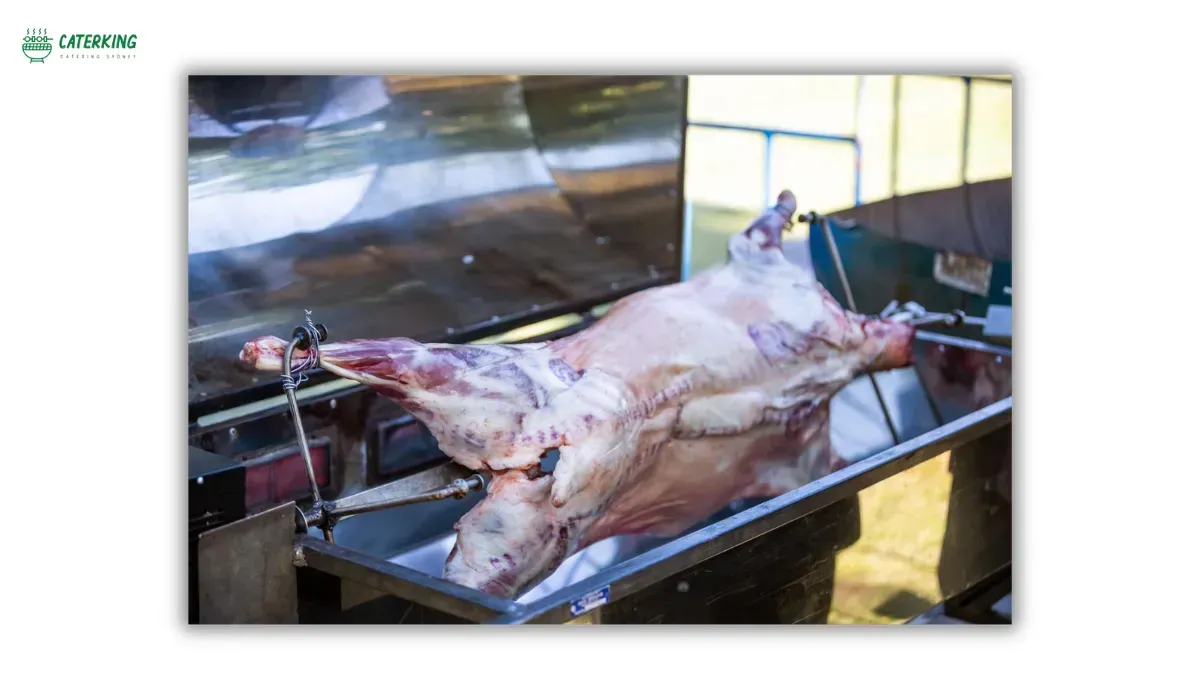
Balance check: With the lamb mounted but the motor off, hold the rod at both ends and allow it to rotate freely. If one side consistently falls to the bottom, the load is uneven, reposition the rod or adjust the back brace before cooking begins. An unbalanced lamb means one side faces the coals longer per revolution and overcooks.
For leg or shoulder: Truss tightly with butcher's twine at 4 cm intervals. Thread the rod through the geometric centre. Tighten the spit forks until the prongs grip deep into the flesh on both sides, the meat must not move independently of the rod. Spin by hand to confirm balance before starting the motor.
Cooking Lamb on a Spit
Cooking lamb on a spit is the controlled application of radiant heat over time, where temperature stability, internal doneness, and surface moisture interact to produce the final result.
Heat and Fire Setup
Target 160-180°C (320-355°F) at the level of the meat throughout the primary cook. Readers comparing spit cooking with other roasting methods can also review roasting vs rotisserie to understand how rotation changes heat exposure and moisture retention. This temperature allows collagen to convert steadily and the exterior to build colour gradually. Above 200°C, the surface chars before the interior reaches temperature.
Use natural lump charcoal (ironbark, gidgee, or red gum) for whole lamb and long cooks, these hardwoods produce consistent heat for 6-8 hours with incremental additions. Add fresh coals every 45-60 minutes. For whole lamb, position the majority of coals under the legs and shoulders in the first two hours, the stomach cavity skin is thin and will char if coals are positioned directly beneath it from the start.
Internal Temperature and Cooking Times
Internal temperature measurement is the method used to determine doneness by tracking heat penetration into the thickest part of the meat rather than relying on time alone.
| Cut | Weight | Cook Time | Pull Temp | Final Eating Temp |
|---|---|---|---|---|
| Leg (bone-in) | 2-3 kg | 1.5-2.5 hrs | 60-65°C | 63-68°C |
| Leg (boneless) | 1.5-2.5 kg | 1.5-2.5 hrs | 60-65°C | 63-68°C |
| Shoulder | 1.5-2.5 kg | 2-3 hrs | 70-75°C | 73-78°C |
| Whole lamb | 10-12 kg | 4-6 hrs | 75°C (legs) | 75°C+ |
| Whole lamb | 13-17 kg | 6-8 hrs | 75°C (legs) | 75°C+ |
Probe in the thickest part of the meat, away from the bone. The bone conducts heat faster than surrounding muscle, probing against it produces a falsely elevated reading. On a whole lamb, probe both the shoulder and leg independently as these sections cook at different rates.
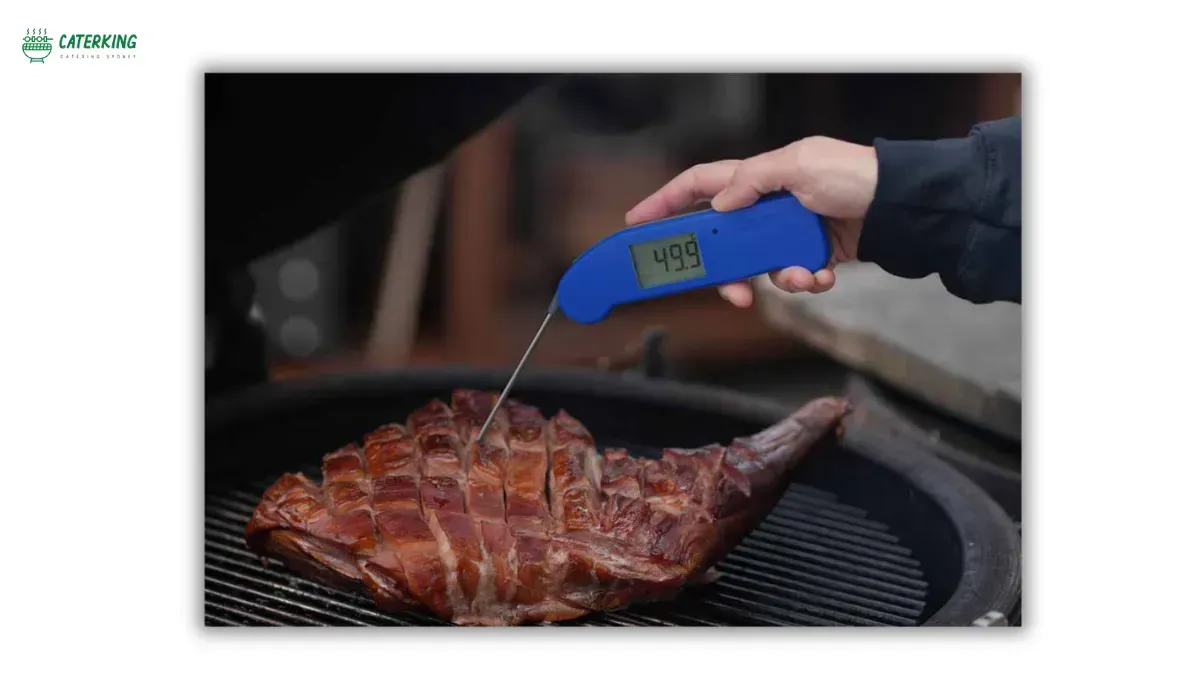
Pull temperature accounts for carryover cooking: the internal temperature continues rising 3-5°C after the lamb comes off the spit. Factor this into when the lamb is removed.
Basting
Lamb leg is lean without regular basting, the surface dries and chars before the interior reaches temperature. Baste every 20-30 minutes throughout the entire cook.
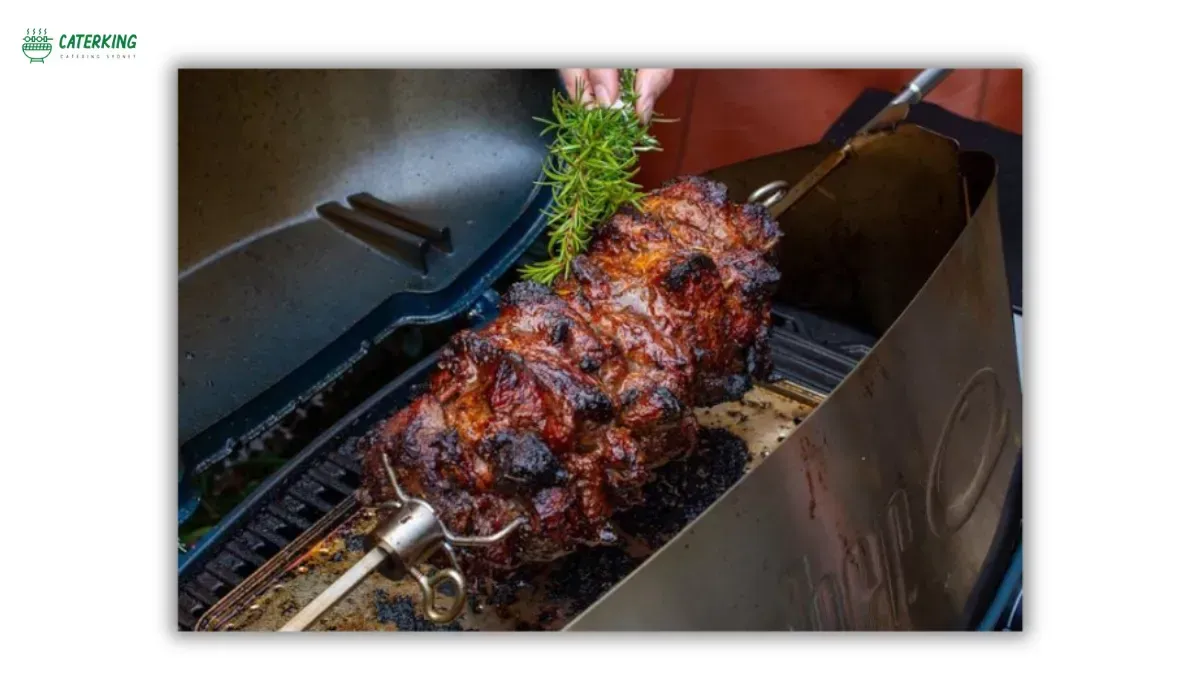
Standard basting mixture:
- 3 parts olive oil, 1 part fresh lemon juice
- Salt, dried oregano, crushed garlic
Use fresh rosemary sprigs tied together as the basting brush, the sprigs release rosemary oils directly onto the surface with each application and is standard practice in Greek and Australian spit roast tradition. Keep the mixture in an enclosed container near the spit. Sauce and finishing choices also matter once the lamb is carved, and these ideas for best sauces for spit roast pair well with lamb.
Resting and Carving
When lamb comes off the spit, the muscle fibres are contracted and internal moisture is under pressure. Cutting immediately releases that liquid onto the carving board. Resting allows fibres to relax and moisture to redistribute throughout the cut.
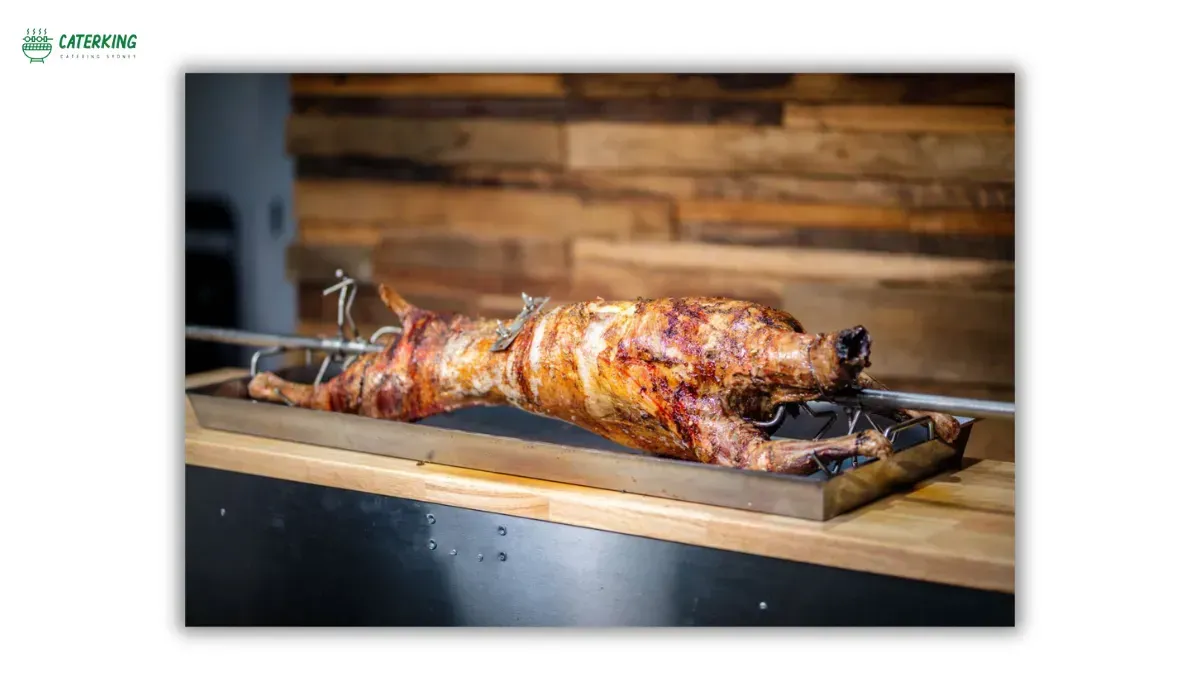
- Leg and shoulder: Rest 15-20 minutes, tented loosely with foil and a tea towel over the top
- Whole lamb: Rest 30-45 minutes using the same method
Do not wrap tightly in foil, trapped steam softens the surface texture.
Carving: Always cut against the grain. On a bone-in leg, follow the bone with the tip of the knife to free the meat cleanly before slicing. For whole lamb, begin with the legs cut down to the hip joint and separate cleanly at the socket. Work to the shoulder next, then the ribs and saddle last. Pour any drip tray juices and collected basting liquid over the carved meat before serving.
Common Failures and Why They Happen
Common spit roasting failures are the result of imbalance between heat distribution, internal temperature progression, and structural stability on the spit. Each issue below links directly to a specific breakdown in one of these variables.
- Dry leg meat: caused by ambient temperature too high during the primary phase. Above 200°C, the exterior dries and chars before the interior reaches temperature. Fix: hold 160-180°C strictly and baste every 20-30 minutes.
- Tough whole lamb legs that won't pull: the internal temperature of the leg did not reach 75°C. The collagen in the thick leg muscles has not converted to gelatin. Fix: more time at the same moderate heat, never raise temperature to force the cook.
- Uneven cooking, one side overdone: unbalanced load on the spit or uneven coal distribution. Fix: check balance before cooking; redistribute coals every 45-60 minutes.
- Belly skin burning in the first hour (whole lamb): coals positioned directly beneath the thin stomach cavity skin. Fix: position coals under the legs and shoulders only for the first two hours, then centralise gradually.
- Lamb spinning on the rod instead of rotating with it: spit forks not gripping deep enough, or rod placed off-centre. Fix: stop the motor immediately, remove the lamb, re-secure all bindings and re-tighten the forks before restarting.
FAQs About Roasting Lamb on a Spit
These questions address specific operational steps in spit roasting, including timing, temperature control, and equipment setup.
How long does it take to roast a whole lamb on a spit?
A 10-12 kg whole lamb takes 4-6 hours at 160-180°C. A 13-17 kg lamb takes 6-8 hours.
Cook time varies with wind, ambient temperature, and whether the spit is enclosed or open. Always cook to internal temperature, probe the thickest part of the leg and pull at 75°C. Add 30-45 minutes resting time before carving.
What temperature should lamb be when it comes off the spit?
Pull a leg of lamb at 60-65°C for medium, carryover cooking during resting brings the final temperature to 63-68°C.
Pull whole lamb and shoulder at 75°C in the thickest part of the leg, away from the bone. At this temperature, collagen has converted to gelatin and the meat separates from the bone without resistance.
Do you need to baste lamb on a spit?
Yes, basting is essential for leg and whole lamb.
Lamb leg is lean and dries on the surface during a long cook without regular moisture. Baste every 20-30 minutes with olive oil and lemon juice throughout the entire cook.
Use fresh rosemary sprigs as the basting brush for maximum flavour transfer. Shoulder is fattier and more forgiving but still benefits from basting every 30 minutes.
Bone-in or boneless leg of lamb on the spit?
Bone-in produces more flavour, the bone conducts heat inward and contributes collagen to the surrounding meat.
Boneless is easier to mount, seasons internally before rolling, and is significantly faster to carve at the table. For maximum flavour, choose bone-in. For ease of service at large events, boneless is more practical.
What charcoal is best for spit roasting lamb in Australia?
Ironbark and gidgee are the preferred choices, both are dense hardwoods with long burn times and high heat output, ideal for 5-8 hour whole lamb cooks.
They produce subtle smoke that complements lamb without overpowering it. Red gum and mallee root are widely available in Victoria and South Australia and perform similarly.
Avoid compressed briquettes with binders, they produce off-flavours during the first hour of combustion.
How do I stop the lamb spinning on the spit instead of rotating with it?
Spinning is caused by spit forks not gripping deeply enough, or the rod placed off-centre through the meat.
For whole lamb, the back brace must pin the spine firmly to the rod. For leg and shoulder, tighten the spit forks until the prongs have penetrated deep into the flesh. Test before starting the motor: grip the lamb and turn the rod by hand, the meat must not move independently of the rod.
What sides go with spit roast lamb?
Place halved potatoes in the drip tray for the final 90 minutes, they roast in lamb drippings and absorb all the basting aromatics from the cook.
Classic accompaniments: Greek village salad, warm flatbreads or pita, tzatziki, and lemon wedges. Pour the collected drip tray juices over the carved meat before serving. For more serving inspiration, these guides on
best spit roast side dishes and
what to serve with spit roast help round out the menu.
Let Catering Sydney elevate your catering experience - Get in touch with us now!
You might also like